Semaglutide — Advanced GLP-1 Research Peptide for Metabolic & Weight Regulation Studies
Semaglutide is a long-acting glucagon-like peptide-1 (GLP-1) receptor agonist that has become one of the most significant compounds in modern metabolic and obesity research. Originally developed as a therapeutic analog of the endogenous GLP-1 hormone, semaglutide has attracted global scientific attention for its remarkable effects on blood glucose regulation, appetite suppression, body weight management, and cardiovascular risk markers. Our research-grade Semaglutide is produced to the highest pharmaceutical standards, offering scientists and institutions the purity and consistency required for credible, reproducible preclinical research.
What Is Semaglutide? The Science of a GLP-1 Receptor Agonist
Semaglutide is a synthetic peptide analog of human glucagon-like peptide-1 (GLP-1), sharing approximately 94% sequence homology with the native hormone. It was engineered with specific structural modifications — including a C18 fatty diacid chain attached via a linker to lysine at position 26 — to dramatically extend its half-life compared to endogenous GLP-1, which is degraded within minutes by the enzyme dipeptidyl peptidase-4 (DPP-4). These modifications allow semaglutide to remain active in preclinical models for approximately one week per dose, making it a highly practical research tool for longitudinal metabolic studies.
The compound binds to and activates the GLP-1 receptor (GLP-1R), a G-protein-coupled receptor expressed in the pancreas, brain, gut, heart, and kidneys. This broad receptor distribution underpins semaglutide’s pleiotropic profile, which encompasses not just glycemic control but also appetite modulation, gastric emptying, and potentially cardioprotective and neuroprotective mechanisms — all active areas of ongoing preclinical investigation.
Mechanism of Action: How Semaglutide Activates GLP-1 Receptors
Semaglutide’s research profile stems from its multi-organ engagement through GLP-1R activation. Key mechanisms under investigation include:
Pancreatic Beta-Cell Stimulation: Semaglutide stimulates glucose-dependent insulin secretion from pancreatic beta cells, promoting insulin release only when blood glucose is elevated — a mechanism that minimizes hypoglycemia risk in research models
- Glucagon Suppression: The compound inhibits glucagon release from pancreatic alpha cells, reducing hepatic glucose output and contributing to improved glycemic control in preclinical diabetes models.
- Central Appetite Regulation: By activating GLP-1 receptors in the hypothalamus and brainstem — particularly the arcuate nucleus and nucleus tractus solitarius — semaglutide reduces food intake and promotes satiety signaling in animal models.
- Gastric Emptying Delay: GLP-1R activation slows gastric motility, prolonging the postprandial period and contributing to reduced caloric intake in preclinical feeding studies.
- Cardiovascular and Renal Effects: Emerging preclinical data suggest semaglutide influences endothelial function, inflammation markers, and renal filtration pathways, supporting ongoing investigation into its cardioprotective and nephroprotective properties.
Key Research Areas for Semaglutide
Semaglutide’s versatility across multiple biological systems has made it a cornerstone peptide in several rapidly advancing fields of biomedical research. Below are the primary domains where preclinical data is most compelling.
Type 2 Diabetes and Glucose Homeostasis Research
The most extensively studied application of semaglutide in preclinical research is its role in glucose regulation. In rodent models of type 2 diabetes — including diet-induced obesity (DIO) models and streptozotocin-induced diabetic models — semaglutide has demonstrated significant reductions in fasting blood glucose, HbA1c equivalents, and postprandial glucose excursions. Researchers have observed enhanced insulin sensitivity, improved beta-cell function, and even potential beta-cell mass preservation in chronic administration studies. These findings position semaglutide as a critical tool for studying the GLP-1 axis in metabolic disease pathology.
Obesity and Body Weight Regulation Research
Semaglutide has generated extraordinary scientific interest as a research model for obesity biology. In high-fat diet-induced obese rodent models, semaglutide administration produces marked reductions in body weight, fat mass, and food intake. Researchers studying the central mechanisms of appetite regulation have used semaglutide to probe hypothalamic neuropeptide pathways — including NPY/AgRP and POMC/CART circuits — that govern energy homeostasis. The compound’s ability to induce sustained negative energy balance without apparent compensatory mechanisms makes it uniquely valuable for long-term obesity research protocols.
Cardiovascular Research and Cardiometabolic Risk
Preclinical cardiovascular research with semaglutide has yielded intriguing results. Studies in atherosclerosis-prone animal models have reported reductions in aortic plaque burden, improved endothelial function, and lower circulating inflammatory cytokines following semaglutide treatment. Researchers have also investigated its effects on blood pressure, heart rate, and myocardial ischemia-reperfusion injury. The GLP-1 receptor’s expression in cardiomyocytes and vascular smooth muscle cells provides a mechanistic basis for these cardioprotective observations, making semaglutide an important research compound for cardiometabolic scientists.
Neuroscience and Neuroprotection Research
An emerging and exciting frontier for semaglutide research is its potential neuroprotective activity. GLP-1 receptors are expressed throughout the central nervous system, and preclinical studies in models of Parkinson’s disease, Alzheimer’s disease, and traumatic brain injury have reported promising outcomes including reduced neuroinflammation, decreased amyloid burden, and improved cognitive performance. Researchers are actively investigating the mechanisms by which semaglutide and related GLP-1 agonists may confer neuroprotection, with particular interest in mitochondrial function, oxidative stress reduction, and neuroplasticity modulation.
Product Specifications: Research-Grade Semaglutide
- Peptide Sequence: His-Aib-Glu-Gly-Thr-Phe-Thr-Ser-Asp-Val-Ser-Ser-Tyr-Leu-Glu-Gly-Gln-Ala-Ala-Lys(C18 diacid)-Glu-Phe-Ile-Ala-Trp-Leu-Val-Arg-Gly-Arg
- Molecular Formula: C187H291N45O59
- Molecular Weight: 4,113.58 g/mol
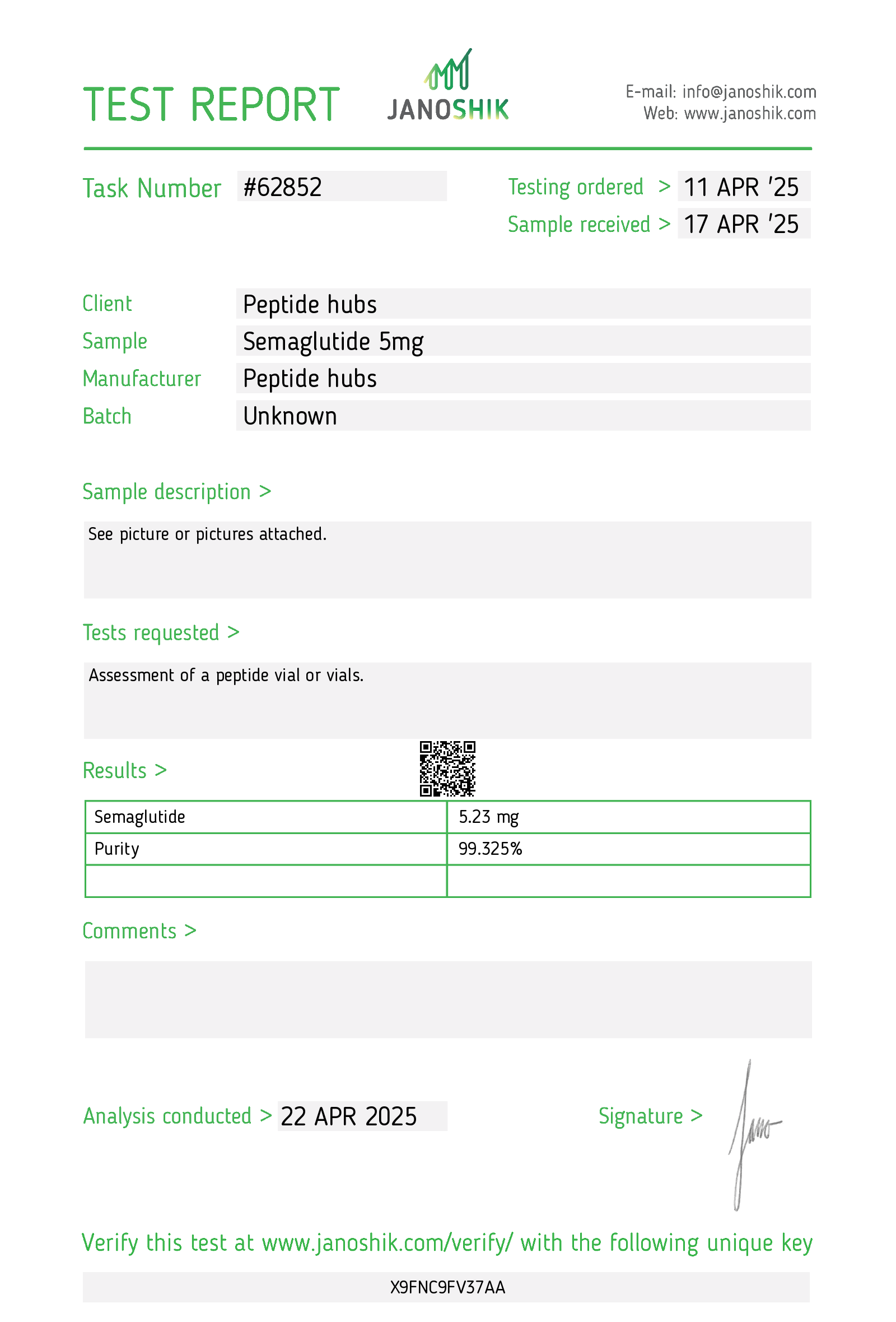
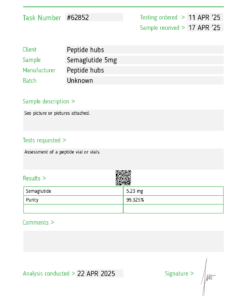
- Purity: ≥99% (HPLC verified; Mass Spectrometry confirmed)
- Appearance: White to off-white lyophilized powder
- Solubility: Soluble in water, phosphate-buffered saline (PBS), or bacteriostatic water
- Storage: 2–8°C (refrigerator); long-term storage at -20°C
- Shelf Life: 24 months lyophilized; 28 days after reconstitution when refrigerated
- CAS Number: 910463-68-2
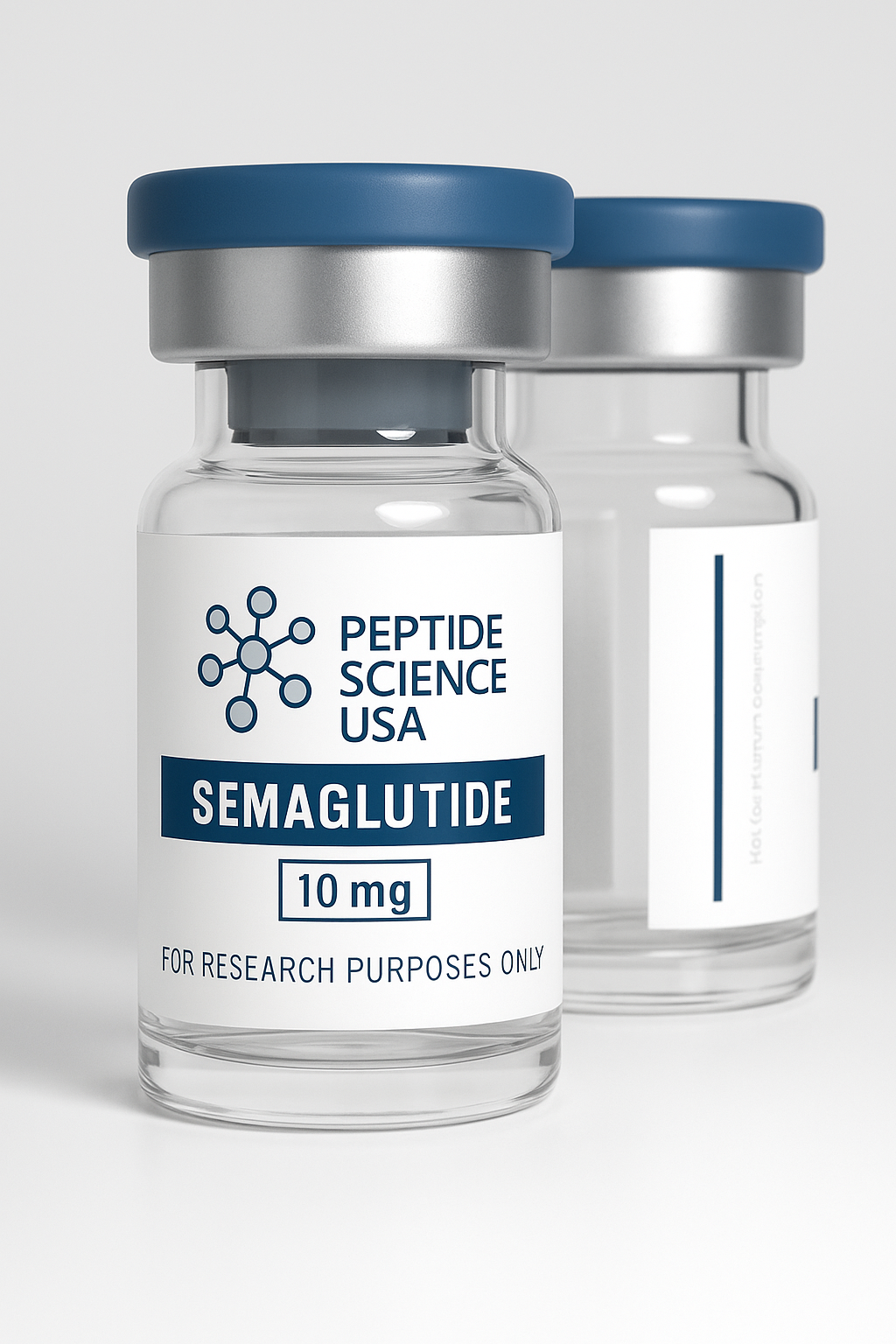
- Available Quantities: 2mg, 5mg, 10mg vials
Why Choose Our Research-Grade Semaglutide? Purity Guaranteed
In peptide research, compound quality is not a preference — it is a scientific necessity. Impurities, incorrect folding, or degraded peptide can invalidate experimental results and waste months of research time. Here is how our semaglutide meets the demands of serious science:
- Independent Third-Party Testing: Every batch undergoes HPLC purity analysis and mass spectrometry identity confirmation by accredited independent laboratories. Full Certificates of Analysis are available for download with every order.
- Pharmaceutical-Grade Solid-Phase Peptide Synthesis (SPPS): Manufactured using Fmoc-SPPS methodology with pharmaceutical-grade protected amino acids and coupling reagents, ensuring correct sequence assembly and minimal deletion sequences.
- Lyophilized for Maximum Stability: Supplied as a freeze-dried powder to preserve full bioactivity during storage and shipping, eliminating concerns about degradation during transit.
- Sterile, ISO-Compliant Manufacturing: Produced in facilities operating under ISO 9001 and cGMP-aligned quality systems, with full environmental monitoring and contamination control protocols.
- Cold-Chain Compliant Shipping: All semaglutide orders are dispatched in temperature-controlled packaging with gel ice packs and insulated liners, maintaining cold-chain integrity from warehouse to delivery.
- Dedicated Research Support: Our team of peptide scientists is available to answer questions about reconstitution, storage, dosing protocols, and experimental design considerations.
Storage, Handling & Reconstitution Protocol for Semaglutide
Optimal Storage Conditions
- Store lyophilized semaglutide at 2–8°C, away from light and moisture.
- For storage periods exceeding 6 months, transfer to -20°C in a dedicated peptide freezer.
- Avoid repeated freeze-thaw cycles to prevent peptide aggregation and loss of bioactivity.
- Keep the vial sealed until ready to use; once opened, reconstitute promptly.
Reconstitution Protocol
- Use sterile bacteriostatic water (preferred) or sterile 0.9% saline for reconstitution.
- Inject the diluent slowly into the vial, directing the stream against the glass wall rather than directly onto the powder cake.
- Gently swirl the vial — do not vortex or shake — until the lyophilized cake is fully dissolved and the solution is clear.
- For a 2mg vial, a typical reconstitution volume is 1ml, yielding 2mg/ml (2000mcg/ml). Adjust as needed for your experimental concentration requirements.
- Once reconstituted, store at 2–8°C and use within 28 days. Label the vial with the reconstitution date.
Semaglutide vs. Other GLP-1 Agonists: Why Researchers Prefer Semaglutide
The GLP-1 receptor agonist class includes several compounds — liraglutide, exenatide, dulaglutide, and tirzepatide among them. Each has a distinct pharmacological profile that makes it more or less suited to specific research questions.
- Liraglutide: Semaglutide has a longer half-life (~165 hours vs. ~13 hours), enabling once-weekly dosing in preclinical studies rather than once-daily administration. This reduces handling frequency and stress variables in animal models.vs. Exenatide: Semaglutide demonstrates significantly greater GLP-1R binding affinity and a more prolonged duration of action than
- exenatide, producing more pronounced and sustained metabolic effects in comparative preclinical studies.
- Tirzepatide: While tirzepatide offers dual GIP/GLP-1 agonism, semaglutide’s monoagonist profile allows researchers to isolate and attribute effects specifically to GLP-1R activation — a critical distinction for mechanistic studies.
- Overall: Semaglutide’s combination of high receptor selectivity, extended half-life, well-characterized pharmacokinetics, and extensive existing literature makes it the preferred GLP-1 agonist for most metabolic research applications.
Frequently Asked Questions About Research-Grade Semaglutide
What concentration should I use for metabolic research studies?
Concentration selection depends heavily on your experimental model and research objectives. In most published rodent metabolic studies, doses in the range of 3–30 nmol/kg body weight administered subcutaneously once weekly have been used. We recommend consulting the primary literature relevant to your specific model and designing your dosing protocol accordingly. Our research support team is available to discuss protocol considerations.
How is semaglutide different from ozempic or wegovy?
Ozempic and Wegovy are FDA-approved pharmaceutical formulations of semaglutide intended for clinical use in type 2 diabetes and chronic weight management respectively. Our semaglutide is a research-grade compound supplied for preclinical scientific investigation only. It is not a pharmaceutical product, is not sterile in the clinical sense, and is not approved or intended for human administration under any circumstances.
Can semaglutide be combined with other peptides in research protocols?
Many researchers investigate combination protocols involving semaglutide alongside other metabolic peptides such as insulin analogs, GIP agonists, or leptin analogs to study additive or synergistic effects on energy homeostasis. Any combination protocols should be rigorously designed with appropriate controls, and all work should be conducted within approved institutional animal care and use protocols (IACUC) or equivalent frameworks.
Order Research-Grade Semaglutide — Trusted Worldwide Delivery
We supply research-grade semaglutide to universities, private laboratories, CROs, and independent research scientists across the globe. Every order is dispatched within 24–48 hours of confirmation, packed in cold-chain compliant materials, and shipped with full tracking.
- Flexible Quantities: Available in 2mg, 5mg, and 10mg vials to suit pilot studies through full-scale research programs.
- Volume Discounts: Reduced pricing available on bulk orders of 10 vials or more. Contact our research sales team for a custom quote.
- CoA Included: Certificate of Analysis with every order — HPLC trace, mass spec confirmation, and purity percentage.
- Expert Support: Peptide scientists on hand to assist with experimental design, reconstitution, and storage queries.
Advance the frontier of metabolic, cardiovascular, and neuroscience research with the GLP-1 agonist that has reshaped the field. Order semaglutide today and experience the quality that rigorous science demands.
Be the first to review “Semaglutide”
Related products
Peptide
Peptide
Peptide
Peptide
Peptide
Peptide
Peptide
Peptide
Reviews
There are no reviews yet.