
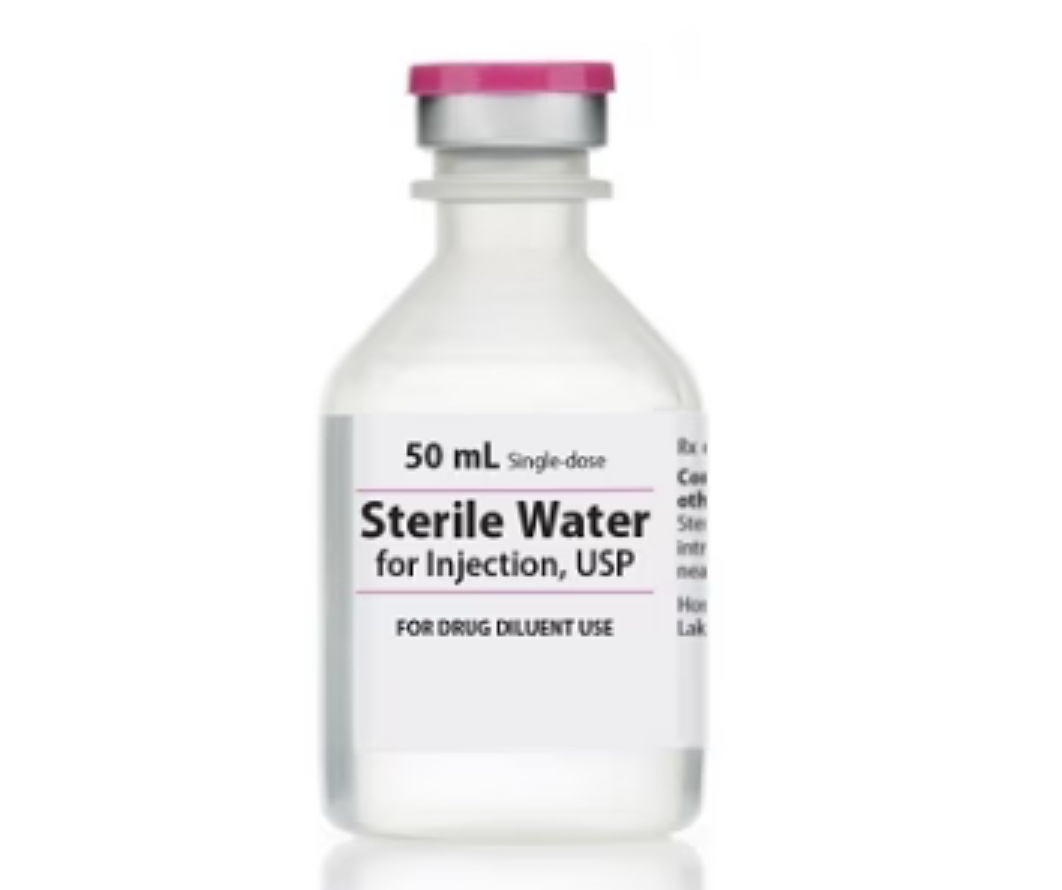

Sterile Water for Injection (SWFI) Pharmaceutical-Grade Pyrogen-Free Water
Sterile Water for Injection (SWFI) is a highly purified, pyrogen-free pharmaceutical-grade water specifically manufactured and packaged for use in clinical and medical settings. It is one of the most fundamental yet critically important pharmaceutical products in both hospital and community healthcare, serving as the universal solvent and diluent for a wide range of injectable medications, infusion preparations, and sterile wound care applications.
Unlike tap water, distilled water, or even general laboratory-grade purified water, Sterile Water for Injection undergoes a rigorous manufacturing process governed by pharmacopoeial standards — including the United States Pharmacopeia (USP), British Pharmacopoeia (BP), and European Pharmacopoeia (Ph. Eur.) — to ensure it is entirely free of microbial contamination, pyrogens (fever-inducing substances), particulate matter, and extraneous chemicals. This exceptional purity standard makes it safe for direct introduction into the human body via injection, infusion, or application to sterile tissue.
Product Specifications
Product Name: Sterile Water for Injection (SWFI)
Other Names: Water for Injection USP / BP / Ph. Eur., Apyrogenic Water, Pyrogen-Free Water
Active Ingredient: Purified Water (Aqua ad Iniectabilia)
Form: Clear, colourless aqueous solution
pH: 5.0–7.0 (neutral to slightly acidic — no buffers added)
Osmolality: Hypotonic (0 mOsm/kg — no solutes)
Pyrogen Status: Pyrogen-free / Apyrogenic (meets LAL test or rabbit pyrogen test)
Sterility: Terminally sterilised; meets BP/USP sterility requirements
Preservatives: None — preservative-free
Electrolytes: None
Available Pack Sizes: 2 mL, 5 mL, 10 mL, 20 mL, 50 mL vials; 100 mL, 250 mL, 500 mL, 1000 mL bags/bottles
Pharmacopoeial Std: USP, BP, Ph. Eur. compliant
Storage: Store below 25°C; protect from freezing and direct sunlight
Shelf Life: Typically 2–3 years (see individual pack labelling)
Prescription Status: General Sale / OTC (varies by market and pack size)
What Is Sterile Water for Injection? Definition & Standards
Sterile Water for Injection is defined by the major world pharmacopoeias as water that has been purified by distillation or reverse osmosis, rendered sterile by terminal heat sterilisation (autoclave), and confirmed free of pyrogens through validated testing. It contains no additives, preservatives, antimicrobial agents, buffers, or tonicity-adjusting substances — making it the purest form of water used in pharmaceutical practice.
Pharmacopoeial Definitions
Water for Injections BP (British Pharmacopoeia): Prepared from potable water or purified water by distillation; meets limits for bacterial endotoxins (pyrogens), total organic carbon, conductivity, and sterility. The BP mandates that Water for Injections be used within a short time of preparation or stored under conditions that prevent microbial growth.
Water for Injection USP (United States Pharmacopeia): Purified by distillation or reverse osmosis; meets requirements for bacterial endotoxins, total organic carbon, conductivity, pH, and sterility. The USP also defines Sterile Water for Injection as the packaged, terminally sterilised form ready for clinical use.
Water for Injections Ph. Eur. (European Pharmacopoeia): Similar requirements to BP, with specific conductivity limits and bacterial endotoxin limits aligned with European regulatory standards.
Sterile Water for Injection vs Bacteriostatic Water
A common point of confusion is the distinction between Sterile Water for Injection and Bacteriostatic Water for Injection. While both are sterile and pyrogen-free, bacteriostatic water contains a preservative — typically 0.9% benzyl alcohol — which inhibits bacterial growth and allows the vial to be accessed multiple times. Sterile Water for Injection contains no preservative, meaning each vial or ampoule is strictly single-use once opened to prevent microbial contamination.
The choice between the two depends on the clinical context: single-dose reconstitution and large-volume dilutions typically use SWFI, while repeated-access multi-dose vials often require bacteriostatic water. Some medications specifically require one or the other — always follow the prescribing information for the drug being reconstituted.
Sterile Water for Injection vs Normal Saline (0.9% Sodium Chloride)
Normal saline (0.9% NaCl) is isotonic and contains sodium and chloride ions, making it compatible with direct intravenous infusion in significant volumes. Sterile Water for Injection is hypotonic — it contains no solutes — and must not be infused in large volumes intravenously without first being combined with appropriate solutes or medications, as hypotonic infusion can cause haemolysis (rupture of red blood cells). SWFI is used specifically as a diluent or reconstitution vehicle, not as a standalone IV infusion fluid.
Uses & Clinical Applications of Sterile Water for Injection
Reconstitution of Lyophilised (Freeze-Dried) Medications
The most widespread use of Sterile Water for Injection in clinical practice is the reconstitution of lyophilised (freeze-dried) injectable drugs. Many antibiotics, biologics, hormones, chemotherapy agents, vaccines, and specialty medicines are supplied in powder form to extend shelf life and maintain stability. Before administration, these powders must be dissolved in a compatible sterile diluent — and SWFI is the most frequently specified reconstitution vehicle because its absence of ions, buffers, and preservatives ensures compatibility with a broad range of drug molecules.
Examples of medications commonly reconstituted with Sterile Water for Injection include: vancomycin, cefazolin, aciclovir, azithromycin, human growth hormone (somatropin), lyophilised vaccines, and many oncology biologics.
Dilution of Concentrated Injectables
Many injectable drugs are supplied as concentrated solutions that must be diluted before administration to reach the correct therapeutic concentration or to reduce the risk of local tissue irritation. Sterile Water for Injection is frequently used as the initial
dilution medium before further dilution in compatible infusion fluids such as normal saline or dextrose solutions.
Intravenous Infusion Admixtures
In parenteral nutrition and complex IV admixture preparation, Sterile Water for Injection is used as a base component or added to adjust the volume and concentration of parenteral nutrition bags prepared in aseptic compounding units. It provides a pyrogen-free, preservative-free water source that does not introduce unwanted electrolytes into carefully balanced formulations.
Sterile Wound Irrigation
Sterile Water for Injection is widely used in wound care for the irrigation and cleansing of surgical wounds, traumatic lacerations, burns, and chronic wounds. Its purity and sterility make it appropriate for direct contact with exposed tissue, open wounds, and surgical sites. It is particularly valued in settings where saline is unavailable or where salt content could be detrimental to wound healing.
Bladder Irrigation
In urological procedures, Sterile Water for Injection may be used for continuous or intermittent bladder irrigation — particularly in transurethral resection of the prostate (TURP) procedures, where its hypotonic nature helps lyse red blood cells in the surgical field, improving visualisation.
Ophthalmic Use
Sterile Water for Injection is suitable for use in ophthalmic (eye) procedures including irrigation during surgery, preparation of ophthalmic solutions, and cleaning of the ocular surface in clinical settings where sterile irrigation is required.
Inhalation Therapy
In respiratory medicine, Sterile Water for Injection is used to dilute bronchodilators, corticosteroids, and other nebulised medications to appropriate concentrations for delivery via nebuliser or humidification circuits in ventilated patients.
Peptide & Hormone Reconstitution (Specialist Use)
Sterile Water for Injection is the preferred reconstitution diluent for human growth hormone (HGH/somatropin), peptide hormones, and research-grade peptides, where the absence of preservatives, ions, and buffers is critical to maintaining molecular integrity and avoiding incompatibilities.
Preparation, Handling & Administration Guidelines
Before Use
- Inspect the vial or ampoule for visible particulate matter, cloudiness, or discolouration — do not use if present
- Check the expiry date on the label — do not use expired product
- Confirm the integrity of the seal — do not use if the seal has been previously broken or damaged
- Allow refrigerated product to reach room temperature before use if required by the drug being reconstituted
- Use aseptic technique throughout — work in a clean environment, wear gloves, and minimise exposure time once opened
Reconstitution
- Draw up the required volume of SWFI using a sterile syringe and needle
- Inject into the vial of lyophilised powder and gently swirl — do not shake vigorously unless directed, as this may cause protein denaturation
- Ensure the powder is completely dissolved before withdrawing the reconstituted solution
- Label the reconstituted vial with date, time, and expiry of the reconstituted solution
- Administer promptly or store as directed — most reconstituted solutions have limited stability after preparation
Single-Use Rule
Because Sterile Water for Injection contains no preservative, any opened vial or ampoule must be used immediately and discarded after use. Any unused portion remaining in the vial after withdrawing the required dose must be discarded. Reuse of opened SWFI vials risks microbial contamination and patient harm.
Incompatibilities
While Sterile Water for Injection is compatible with the vast majority of injectable medications, certain specific incompatibilities exist. Always consult the Summary of Product Characteristics (SmPC) or prescribing information for the specific drug being reconstituted or diluted to confirm compatibility. As a general principle, SWFI should not be added to blood or blood products.
Safety Information & Contraindications
Critical Warning Do Not Infuse Undiluted in Large Volumes
Sterile Water for Injection must not be administered as a large-volume intravenous infusion without the addition of appropriate solutes (electrolytes, nutrients, or dissolved medications). Because it is hypotonic (contains no solutes), rapid infusion of large volumes of SWFI causes a shift in osmotic pressure that results in haemolysis — the rupture of red blood cells — which can be fatal. SWFI is safe for IV administration only when used as a reconstitution vehicle or when the final preparation with drug solutes is isotonic or near-isotonic.
Precautions
- Use strict aseptic technique when handling SWFI to prevent contamination
- Do not use if the container is damaged, leaking, or if the solution is not crystal clear
- Discard any unused portion — do not store an opened vial for later use
- Ensure the drug being reconstituted is fully compatible with SWFI before use
- Monitor patients for signs of fluid overload, electrolyte imbalance, or adverse reactions when SWFI is used as part of an IV admixture
Paediatric & Neonatal Use
Special care is required when using Sterile Water for Injection in paediatric patients, particularly neonates. The volume administered must be carefully controlled to avoid dilutional hyponatraemia (low blood sodium) or fluid overload in small patients with limited fluid tolerance. Neonatal formulations and preparation procedures should always be guided by a specialist pharmacist or paediatric clinician.
Quality Standards & Manufacturing Compliance
Good Manufacturing Practice (GMP)
Sterile Water for Injection is manufactured under strict Good Manufacturing Practice (GMP) regulations, as required by the MHRA (UK), EMA (EU), and FDA (USA). GMP requirements for parenteral water production include validated water purification systems, continuous microbial monitoring, endotoxin testing on every batch, validated sterilisation cycles, and environmental monitoring of the manufacturing area.
Endotoxin & Pyrogen Testing
Every batch of Sterile Water for Injection must pass bacterial endotoxin testing using the Limulus Amebocyte Lysate (LAL) test or an equivalent validated method, as specified by the relevant pharmacopoeia. The endotoxin limit for Water for Injections is 0.25 IU/mL — an exceptionally low threshold that ensures freedom from fever-inducing substances even when administered directly into the bloodstream.
Sterility Testing
Each production batch undergoes sterility testing in accordance with pharmacopoeial methods, confirming the complete absence of viable microorganisms including bacteria, fungi, and mycoplasma. Terminal sterilisation by autoclaving (moist heat at 121°C for a validated duration) is the gold-standard sterilisation method used for the majority of SWFI manufacturing.
Storage, Shelf Life & Disposal
- Store at controlled room temperature — below 25°C is the standard recommendation
- Do not freeze — freezing may cause container damage and compromise sterility
- Protect from direct sunlight and excessive heat
- Store in original packaging until point of use
- Do not use after the expiry date printed on the label
- Once opened, use immediately and discard any remaining solution
- Dispose of used ampoules, vials, and any unused product in accordance with local pharmaceutical waste disposal regulations
- Do not dispose of SWFI via household waste channels — use designated pharmaceutical waste streams
Why Choose Pharmaceutical-Grade Sterile Water for Injection?
Purity You Can Trust
Pharmaceutical-grade SWFI is subject to far more stringent quality controls than any other grade of purified water — including laboratory reagent grade, analytical grade, or HPLC-grade water. The pharmacopoeial standards governing its production are among the most demanding specifications applied to any pharmaceutical product, ensuring that what reaches the patient is as close to absolute purity as manufacturing science allows.
Universal Compatibility
The absence of ions, buffers, preservatives, and other additives makes Sterile Water for Injection the most broadly compatible pharmaceutical diluent available. It is compatible with virtually every injectable drug formulation, making it the default choice for reconstitution and dilution across all therapeutic areas — from antibiotics and antivirals to biologics, hormones, and oncology agents.
Regulatory Assurance
Products labelled as Sterile Water for Injection must comply with the relevant national or regional pharmacopoeia. This regulatory framework provides assurance that every vial — regardless of manufacturer — meets the same core purity, sterility, and quality standards. Purchasing from licensed pharmaceutical suppliers ensures full traceability, batch documentation, and compliance with applicable medicines regulations.
Frequently Asked Questions
Can I use distilled water instead of Sterile Water for Injection?
No. Distilled water is not sterile and is not pyrogen-free unless specifically processed and tested to pharmaceutical standards. Using non-sterile water to reconstitute injectable medications poses a serious risk of infection and sepsis. Always use a product specifically labelled as Sterile Water for Injection.
Is Sterile Water for Injection the same as normal saline?
No. Normal saline (0.9% sodium chloride solution) is isotonic and contains electrolytes. Sterile Water for Injection contains no solutes and is hypotonic. They are not interchangeable — always follow the reconstitution or dilution instructions specific to the drug being prepared.
How long is Sterile Water for Injection stable after opening?
Once opened, a vial of Sterile Water for Injection must be used immediately and any remainder discarded. Unlike bacteriostatic water, SWFI contains no preservative to prevent microbial growth after the seal is broken.
Can Sterile Water for Injection be used for subcutaneous injections?
Yes, in small volumes for reconstitution purposes — for example, when reconstituting growth hormone or peptide medications for subcutaneous administration. However, care must be taken to ensure the final reconstituted solution is at an appropriate tonicity and pH for subcutaneous use. Large volumes of hypotonic fluid are not suitable for subcutaneous injection.
Be the first to review “Sterile Water for Injection”
Related products
Peptide
Peptide
Peptide
Peptide

Peptide
Peptide
Peptide
Peptide

Reviews
There are no reviews yet.