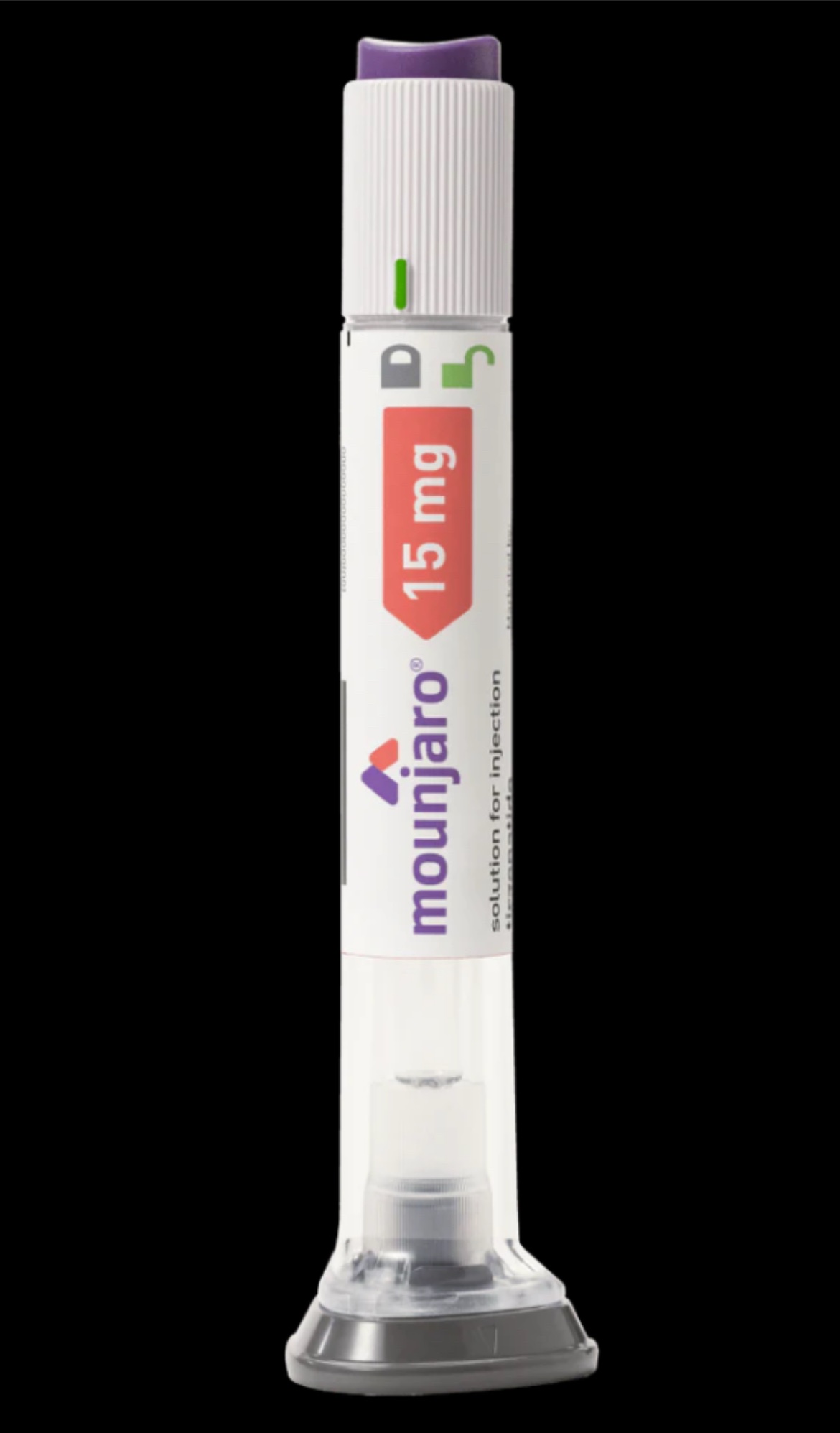
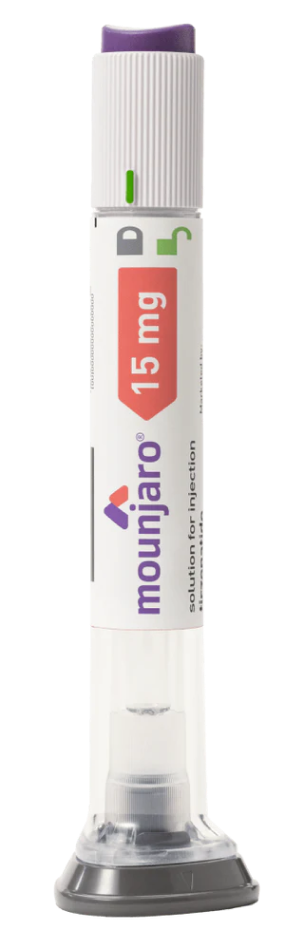
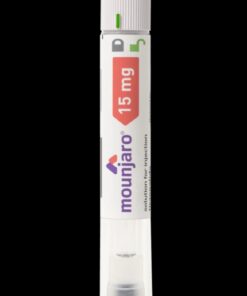
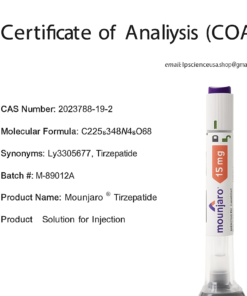
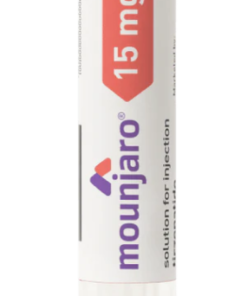
Mounjaro/Zepbound 15mg/Dose
Price range: $684.00 through $1,284.00
Mounjaro / Zepbound 15mg/Dose is a once-weekly injectable medication containing tirzepatide, a dual-action GLP-1 and GIP receptor agonist designed to support significant weight loss and improve blood sugar control. Ideal for adults with type 2 diabetes or those seeking medical weight management, the 15mg dose offers the highest strength available for maximum therapeutic effect. FDA-approved and clinically proven, it helps reduce appetite, regulate blood
Mounjaro / Zepbound 15mg per Dose — Tirzepatide for Type 2 Diabetes & Weight Management
Mounjaro and Zepbound are two brand names for the same groundbreaking active ingredient: tirzepatide 15 mg, developed by Eli Lilly and Company. While Mounjaro is licensed specifically for the management of type 2 diabetes mellitus, Zepbound carries approval in the United States for chronic weight management in adults living with obesity or overweight with weight-related health conditions. Both products deliver an identical 15 mg dose of tirzepatide per injection, making them clinically equivalent at the molecular level — a single compound serving two transformative therapeutic purposes.
This product page covers everything you need to know about tirzepatide 15 mg per dose: what it is, how it works, who it is for, how to use it, and why it has set a new standard in metabolic medicine.
Product Specifications at a Glance
Brand Names: Mounjaro (diabetes) / Zepbound (weight management)
Active Ingredient: Tirzepatide
Dose Strength: 15 mg per dose
Form: Solution for subcutaneous injection
Device: Pre-filled KwikPen auto-injector
Injection Frequency: Once weekly
Manufacturer: Eli Lilly and Company
Approved Indications: Type 2 diabetes (Mounjaro); Chronic weight management (Zepbound)
Regulatory Status: FDA-approved (USA); EMA-approved (EU); MHRA-approved (UK)
Prescription Status: Prescription-only medicine (POM)
Storage: Refrigerate at 2°C–8°C; up to 21 days at room temperature (max 30°C)
Mounjaro vs Zepbound — What Is the Difference?
One of the most common questions from patients and healthcare professionals alike is: what is the difference between Mounjaro and Zepbound? The answer lies not in the medicine itself but in the regulatory approval and intended indication.
Both products contain tirzepatide — the same molecule, the same dose, and the same pre-filled auto-injector. The distinction is purely a commercial and regulatory one:
- Mounjaro was the first brand name approved — initially by the FDA in May 2022 for type 2 diabetes, followed by EMA and MHRA approvals for the same indication
- Zepbound was approved by the FDA in November 2023 specifically for chronic weight management in adults with obesity (BMI 30+) or overweight (BMI 27+) with at least one weight-related comorbidity
- In some markets (particularly outside the USA), Mounjaro now holds dual approval for both indications under a single brand name
- In the USA, Eli Lilly chose to market the weight management indication under a separate Zepbound brand name
For patients, this means the 15 mg tirzepatide dose you receive whether prescribed Mounjaro or Zepbound is pharmacologically identical. The prescribing context — diabetes management or weight loss — determines which brand name appears on your prescription.
What Is Tirzepatide? The Science Behind Mounjaro & Zepbound
Tirzepatide is a first-in-class, once-weekly injectable medication classified as a dual glucose-dependent insulinotropic polypeptide (GIP) and glucagon-like peptide-1 (GLP-1) receptor agonist. This dual-receptor mechanism is what sets tirzepatide apart from earlier GLP-1 receptor agonists such as semaglutide (marketed as Ozempic and Wegovy) and liraglutide (Victoza and Saxenda).
The GLP-1 Receptor Pathway
GLP-1 is a naturally occurring gut hormone released in response to food intake. When tirzepatide activates GLP-1 receptors in the pancreas, it stimulates glucose-dependent insulin secretion — meaning it prompts the pancreas to release insulin only when blood glucose is elevated. This glucose-dependent action significantly reduces the risk of hypoglycaemia compared with older insulin secretagogues. Simultaneously, GLP-1 agonism suppresses glucagon production, slows gastric emptying, and acts on appetite-regulating centres in the brain to reduce food intake and promote feelings of fullness.
The GIP Receptor Pathway
GIP is the second incretin hormone targeted by tirzepatide. Historically overlooked in diabetes drug development, GIP receptor agonism has emerged as a powerful
complementary mechanism. By activating GIP receptors in adipose (fat) tissue, tirzepatide enhances insulin sensitivity, modulates fat metabolism, and reduces fat cell inflammation. In adipose tissue, GIP signalling may also promote energy expenditure, contributing to greater fat mass reduction than GLP-1 agonism alone.
Why Dual Agonism Outperforms Single-Target Therapies
The combination of GIP and GLP-1 receptor activation produces synergistic metabolic effects that exceed what either pathway delivers independently. Clinical trial data consistently shows tirzepatide 15 mg achieving greater reductions in HbA1c and body weight than the highest approved doses of semaglutide, establishing it as the most effective pharmacological agent in the incretin class to date.
Approved Indications — Who Is Mounjaro / Zepbound 15mg For?
Type 2 Diabetes Mellitus — Mounjaro
Mounjaro 15 mg is indicated as an adjunct to diet and exercise to improve glycaemic control in adults with type 2 diabetes mellitus. It is used across the full spectrum of type 2 diabetes management — from patients inadequately controlled on metformin alone to those requiring intensification beyond dual oral therapy or GLP-1 monotherapy.
In the landmark SURPASS clinical trial programme, tirzepatide 15 mg delivered HbA1c reductions of up to 2.58 percentage points from baseline — the largest reductions recorded for any non-insulin glucose-lowering agent in pivotal trials. In SURPASS-2, tirzepatide 15 mg demonstrated superiority over semaglutide 1 mg, reducing HbA1c by 2.46% versus 1.86% with semaglutide.
Chronic Weight Management — Zepbound
Zepbound 15 mg is approved for chronic weight management as an adjunct to a reduced-calorie diet and increased physical activity in adults with an initial BMI of 30 kg/m² or greater (obesity), or 27 kg/m² or greater (overweight) with at least one weight-related comorbidity — such as hypertension, type 2 diabetes, dyslipidaemia, or obstructive sleep apnoea.
The SURMOUNT-1 trial — the pivotal study supporting Zepbound approval — enrolled over 2,500 adults with obesity without diabetes. Participants receiving tirzepatide 15 mg weekly for 72 weeks achieved a mean weight reduction of 20.9% of initial body weight. Approximately 37% of participants achieved at least 25% weight loss, and over 50% achieved weight loss exceeding 20% — outcomes previously associated only with bariatric surgery.
The SURMOUNT-2 trial, conducted in adults with obesity and type 2 diabetes, demonstrated a mean weight reduction of 15.7% at the 15 mg dose — confirming
tirzepatide’s efficacy even in the more metabolically complex population where weight loss is typically harder to achieve.
Dosing & Titration Schedule — Reaching 15mg
The 15 mg dose is the highest and final maintenance dose of tirzepatide. It is reached following a structured titration schedule designed to minimise gastrointestinal side effects while allowing the body to adapt gradually. The standard titration pathway is as follows:
- Weeks 1–4: 2.5 mg once weekly (initiation dose — not therapeutically active, used for tolerability)
- Weeks 5–8: 5 mg once weekly
- Weeks 9–12: 7.5 mg once weekly
- Weeks 13–16: 10 mg once weekly
- Weeks 17–20: 12.5 mg once weekly
- Week 21 onwards: 15 mg once weekly — maintenance dose
Your prescriber may slow the titration if gastrointestinal side effects are significant. Some patients achieve their treatment goals at lower doses (10 mg or 12.5 mg) and may not need to progress to 15 mg. The 15 mg dose is the target for those seeking maximum glycaemic control or maximum weight reduction.
Missed Dose Instructions
If a dose is missed, administer as soon as possible within 4 days of the scheduled day. If more than 4 days have elapsed, skip the missed dose and resume on the next regularly scheduled weekly day. Do not administer two doses within 3 days of each other.
How to Administer Tirzepatide 15mg — Injection Instructions
Preparation
- Remove the pen from the refrigerator approximately 30 minutes before use
- Inspect the solution — it should be clear, colourless to slightly yellow, and particle-free
- Check the expiry date — do not use an expired pen
- Wash hands with soap and water before handling
- Choose an injection site: abdomen (5 cm from navel), upper thigh, or outer upper arm
- Rotate injection sites each week — never inject into the same spot consecutively
Injection Technique
- Remove the pen cap
- Clean the injection site with an alcohol swab and allow to dry fully
- Place the pen firmly against the skin at a 90-degree angle
- Press and hold the injection button — a first click signals injection has begun
- Hold until a second click confirms the full dose has been delivered
- Remove the pen and verify the dose window confirms completion
- Dispose of the used pen in a certified sharps container
Never share a pen with another person. Never reuse a pen. Do not inject into skin that is tender, bruised, red, hard, or scarred.
Clinical Evidence — What the Trials Show
SURPASS Programme (Diabetes)
The SURPASS trials (SURPASS 1 through 5) collectively enrolled over 9,000 patients with type 2 diabetes across global sites. Key findings for tirzepatide 15 mg include: HbA1c reductions of 2.01–2.58 percentage points versus baseline; superiority over insulin degludec in SURPASS-3; superiority over insulin glargine in SURPASS-4 in patients at high cardiovascular risk; and superior weight reduction of 10–12 kg versus all comparators tested.
SURMOUNT Programme (Obesity/Weight Management)
The SURMOUNT trials enrolled over 16,000 participants across four trials covering obesity without diabetes, obesity with type 2 diabetes, obesity with cardiovascular risk, and sleep apnoea. The 15 mg dose consistently delivered the greatest weight reductions across all populations, with SURMOUNT-1 recording the highest mean weight loss (20.9%) of any approved pharmacotherapy at the time of publication.
SURMOUNT-MMO (Cardiovascular Outcomes)
An ongoing cardiovascular outcomes trial (SURMOUNT-MMO) is evaluating the effect of tirzepatide on major adverse cardiovascular events (MACE) in adults with obesity and established cardiovascular disease. Early results are expected to further expand the evidence base for tirzepatide in high-risk populations.
Side Effects & Safety Profile
Common Side Effects
- Nausea — most common, particularly at initiation or dose escalation; typically self-limiting
- Vomiting
- Diarrhoea
- Constipation
- Abdominal pain or discomfort
- Decreased appetite
- Injection site reactions: bruising, redness, or mild pain
- Fatigue
- Dyspepsia (indigestion)
Serious but Less Common Side Effects
- Pancreatitis — discontinue immediately if severe persistent abdominal pain develops
- Gallbladder disease — increased risk of gallstones and cholecystitis with significant weight loss
- Hypoglycaemia — particularly when combined with insulin or sulphonylureas; dose reduction of these agents may be required
- Heart rate increase — a modest mean increase of 2–4 bpm has been observed
- Acute kidney injury — secondary to dehydration from gastrointestinal side effects
- Hypersensitivity reactions — including angioedema and anaphylaxis in rare cases
Contraindications
- Personal or family history of medullary thyroid carcinoma (MTC)
- Multiple Endocrine Neoplasia syndrome type 2 (MEN 2)
- Known hypersensitivity to tirzepatide or any excipient
- Type 1 diabetes mellitus
- Pregnancy — discontinue at least one month before planned conception
- Breastfeeding — safety not established
Storage & Disposal
- Store in a refrigerator at 2°C–8°C — do not freeze
- Once removed from refrigeration, use within 21 days if stored below 30°C
- Protect from direct light and heat
- Keep out of reach of children
- Dispose of used pens in an approved sharps container — never in household waste
- Return unused or expired pens to a pharmacy for safe disposal
Why Mounjaro / Zepbound 15mg Stands Apart
Unmatched Weight Loss in a Pill-Free Weekly Injection
No approved pharmacotherapy has matched the weight loss outcomes delivered by tirzepatide 15 mg in head-to-head or pivotal trial comparisons. At nearly 21% mean body weight reduction in SURMOUNT-1, results approach those historically associated with bariatric surgery — delivered through a once-weekly injection rather than an operating room.
Dual Metabolic Benefit
For patients with type 2 diabetes and obesity, Mounjaro / Zepbound 15 mg addresses both conditions simultaneously with a single agent — simplifying treatment regimens, reducing pill burden, and delivering complementary improvements in blood glucose, body weight, blood pressure, and lipid profiles.
Cardiovascular Risk Factor Reduction
Beyond glucose and weight, tirzepatide 15 mg has demonstrated improvements in systolic blood pressure (reductions of 6–10 mmHg), triglycerides, and waist circumference — all recognised cardiovascular risk factors. These secondary benefits add significant long-term clinical value for patients at elevated cardiometabolic risk.
Patient-Friendly Delivery
The KwikPen auto-injector requires no manual dose preparation, no separate needles, and no complex priming steps. With hidden needle technology, automatic retraction, and audible dose confirmation, it is designed to minimise injection-related anxiety and support consistent weekly adherence.
Frequently Asked Questions
Can I use Mounjaro and Zepbound interchangeably?
Yes — both contain tirzepatide at the same dose and are pharmacologically identical. Your prescription will specify one brand based on your approved indication and market availability.
Is tirzepatide better than semaglutide?
In direct comparison trials (SURPASS-2), tirzepatide 15 mg demonstrated statistically significantly greater reductions in both HbA1c and body weight versus semaglutide 1 mg. No approved head-to-head data yet exists against higher doses of semaglutide (2.4 mg), though indirect comparisons are consistently favourable for tirzepatide.
How long do I stay on 15mg?
Tirzepatide is intended as a long-term therapy. Discontinuation typically leads to partial or full reversal of weight and glycaemic benefits. Most clinical guidelines support continued use indefinitely, subject to ongoing tolerability and clinical benefit.
Does Mounjaro / Zepbound cause muscle loss?
Some lean mass reduction can occur with significant weight loss from any cause. However, combining tirzepatide therapy with adequate protein intake and resistance exercise can preserve lean muscle mass during the weight loss process. Your healthcare provider can advise on nutrition and physical activity to protect muscle tissue.
Regulatory Approvals & Prescription Requirements
Mounjaro (tirzepatide) is approved by the European Medicines Agency (EMA) for type 2 diabetes and, in a growing number of European markets, for chronic weight management. It holds MHRA approval in the United Kingdom for both indications. In the United States, Mounjaro holds FDA approval for type 2 diabetes, while Zepbound holds FDA approval for chronic weight management — both at doses from 2.5 mg up to 15 mg once weekly.
Both Mounjaro and Zepbound are prescription-only medicines in all markets. They must be prescribed by a qualified healthcare professional following a clinical assessment confirming the appropriate indication, absence of contraindications, and a suitable titration plan. They are not available for purchase without a valid prescription.
| Quantity | 1 x 2.4mL Prefilled Pen (4 Doses), 2 x 2.4mL Prefilled Pens (8 Doses) |
|---|
Be the first to review “Mounjaro/Zepbound 15mg/Dose”
Related products
Peptide
Peptide
Peptide
Peptide
Peptide
Peptide
Peptide
Peptide
Reviews
There are no reviews yet.