
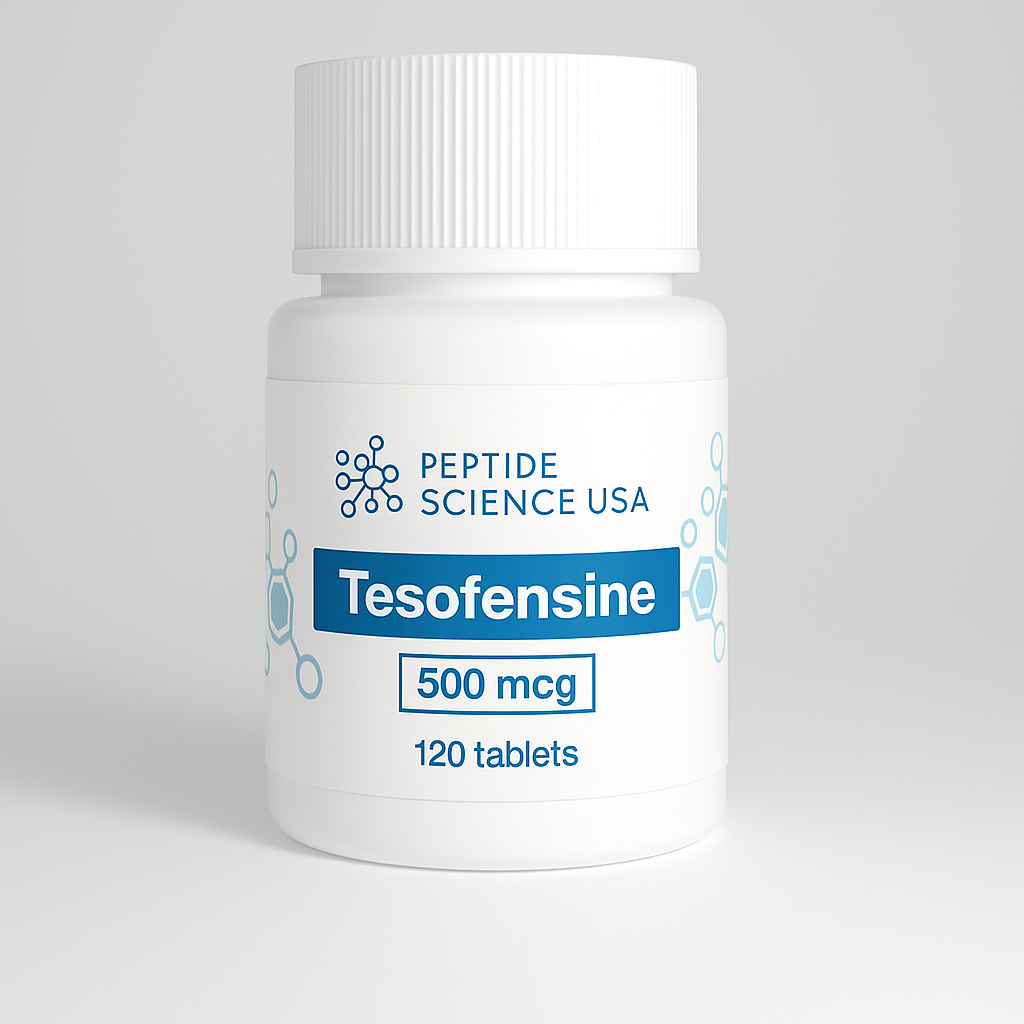


Tesofensine 500mcg — The Potent Triple Monoamine Reuptake Inhibitor for Significant Weight Loss, Appetite Suppression, and Metabolic Research
Tesofensine 500mcg is a powerful, pre-synaptic triple monoamine reuptake inhibitor originally developed by NeuroSearch A/S as a candidate treatment for Alzheimer’s disease and Parkinson’s disease. During its neurological clinical trials, an unexpected and striking finding emerged: participants consistently lost significant body weight. This serendipitous discovery redirected Tesofensine’s entire clinical development trajectory toward obesity pharmacotherapy, where it has since demonstrated some of the most impressive weight loss data ever recorded for an oral small-molecule compound. At a dose of 500mcg daily — the highest dose evaluated in Phase 2 obesity trials — Tesofensine produced mean weight loss of approximately 12.8% of body weight over 24 weeks, a result that comfortably outperformed all comparator anti-obesity medications available at the time of its evaluation.
What Is Tesofensine 500mcg?
Tesofensine (NS2330) is a bicyclic phenyltropane derivative that functions as a highly potent inhibitor of the presynaptic reuptake transporters for three critical monoamine neurotransmitters: serotonin (5-HT), dopamine (DA), and noradrenaline (NA). By simultaneously blocking the serotonin transporter (SERT), dopamine transporter (DAT), and noradrenaline transporter (NET), Tesofensine elevates the synaptic availability of all three monoamines in relevant brain circuits — particularly the hypothalamic appetite-regulation centres and the mesolimbic reward pathway. This triple monoaminergic action produces a uniquely powerful and multi-dimensional suppression of appetite and food-seeking behaviour that single-target agents cannot replicate.
What distinguishes Tesofensine from other weight-loss compounds within the central nervous system acting class is its combined potency, the breadth of its monoaminergic coverage, and the duration of action afforded by its long plasma half-life of approximately 220 hours — enabling once-daily oral dosing with sustained plasma levels and stable pharmacodynamic effects throughout the day. Each capsule or tablet of Tesofensine 500mcg delivers this precise dose in a form optimised for consistent absorption and predictable pharmacokinetic performance.
Mechanism of Action — How Tesofensine Suppresses Appetite and Drives Weight Loss
Serotonin Reuptake Inhibition — Satiety Enhancement
By blocking SERT and increasing synaptic serotonin in the hypothalamus and brainstem, Tesofensine enhances the activity of the brain’s satiety signalling network. Serotonergic pathways — particularly those involving 5-HT2C receptors in the hypothalamic paraventricular nucleus — reduce meal size, prolong the inter-meal interval, and increase the sensitivity of satiety signals from the gut. This results in a meaningful reduction in caloric intake per meal and overall daily energy consumption. The serotonergic component of Tesofensine’s mechanism shares pharmacological territory with fenfluramine and lorcaserin, but is integrated within a broader triple-mechanism framework rather than operating in isolation.
Dopamine Reuptake Inhibition — Reward Pathway Modulation and Motivation
Elevated synaptic dopamine through DAT inhibition modulates the mesolimbic reward system — the neural circuitry that assigns motivational salience to food stimuli and drives food-seeking and consumption behaviour. In obesity, the dopaminergic reward response to food is frequently dysregulated, with reduced D2 receptor availability creating a state of reward hyposensitivity that drives overconsumption to compensate. By increasing dopaminergic tone in the nucleus accumbens and prefrontal cortex, Tesofensine reduces the compulsive and reward-driven dimensions of eating behaviour, supporting dietary adherence and reducing cravings for high-calorie, palatable foods. The dopaminergic component also contributes to Tesofensine’s reported improvements in energy, motivation, and cognitive alertness.
Noradrenaline Reuptake Inhibition Thermogenesis and Energy Expenditure
Noradrenaline reuptake inhibition elevates synaptic noradrenaline in both the central nervous system and peripheral sympathetic nervous system. Centrally, increased noradrenergic tone in the hypothalamus and brainstem contributes to appetite suppression through alpha-2 adrenoceptor and beta-adrenoceptor signalling. Peripherally, elevated noradrenaline activates beta-3 adrenoceptors in brown adipose tissue, stimulating thermogenesis and increasing resting energy expenditure. This peripheral sympathomimetic effect means Tesofensine addresses the energy expenditure side of the caloric balance equation — not merely appetite and intake reduction. The combination of enhanced thermogenesis and reduced caloric consumption creates a powerful and sustained caloric deficit.
Cholinergic Modulation An Additional Dimension
In addition to its triple monoaminergic mechanism, Tesofensine exerts modulatory effects on the cholinergic system through partial inhibition of acetylcholine release. This cholinergic component is believed to contribute to Tesofensine’s cognitive effects — including the improvements in attention, mental clarity, and processing speed reported in research subjects — and may also play a role in its metabolic activity through vagal nerve modulation of gastric motility and satiety signalling. This cholinergic dimension further differentiates Tesofensine from other centrally acting anti-obesity agents.
Key Benefits of Tesofensine 500mcg
1. Exceptional Weight Loss Magnitude for an Oral Compound
Tesofensine’s most striking research finding is the sheer magnitude of weight loss it produced in its Phase 2 obesity trial. At the 500mcg daily dose, participants achieved a mean weight loss of 12.8% of total body weight over just 24 weeks — more than double the weight loss recorded with orlistat, the most widely prescribed oral anti-obesity medication, and substantially greater than sibutramine in head-to-head comparisons at equivalent timeframes. For an oral, once-daily capsule, these results are exceptional and establish Tesofensine as one of the most potent oral weight loss compounds ever evaluated in controlled clinical trials.
2. Powerful Multi-Dimensional Appetite Suppression
Tesofensine’s simultaneous elevation of serotonin, dopamine, and noradrenaline produces appetite suppression that operates across multiple dimensions simultaneously: it reduces hunger signals through serotonergic satiety enhancement, diminishes food cravings and reward-driven eating through dopaminergic modulation, and blunts the hypothalamic hunger drive through noradrenergic central mechanisms. This multi-pathway appetite suppression is qualitatively different from and more robust than the single-mechanism appetite suppression produced by GLP-1 agonists or selective serotonergic or noradrenergic agents alone.
3. Increased Resting Metabolic Rate and Energy Expenditure
Unlike appetite suppressants that achieve weight loss solely by reducing caloric intake, Tesofensine also increases resting metabolic rate through its sympathomimetic noradrenergic component. Clinical measurements in research subjects demonstrated a measurable increase in 24-hour energy expenditure compared to placebo — meaning Tesofensine burns more calories at rest in addition to reducing the number of calories consumed. This dual mechanism — less in, more out — produces a compounding caloric deficit that accelerates and amplifies weight loss beyond what appetite suppression alone could achieve.
4. Preservation of Lean Body Mass During Weight Loss
In clinical trial analysis, the weight lost during Tesofensine treatment was predominantly adipose tissue rather than lean muscle mass. Dual-energy X-ray absorptiometry (DEXA) data from Phase 2 participants showed a favourable fat-to-lean loss ratio, with the majority of weight reduction accounted for by fat mass. Preserving lean body mass during an aggressive weight loss intervention is critical for maintaining metabolic rate, physical strength, and quality of life — and Tesofensine’s profile in this regard compares favourably with other anti-obesity agents.
5. Improvements in Cardiometabolic Risk Markers
The substantial fat loss produced by Tesofensine 500mcg carries secondary improvements in multiple cardiometabolic risk factors. Clinical trial participants demonstrated significant reductions in waist circumference, blood triglycerides, fasting glucose, and insulin resistance markers alongside their weight loss. Blood pressure changes require monitoring due to Tesofensine’s noradrenergic sympathomimetic component, which can cause modest increases in heart rate and systolic blood pressure — highlighting the importance of cardiovascular assessment in any research protocol.
6. Cognitive Enhancement and Mood Improvement
Because Tesofensine elevates dopamine, noradrenaline, and serotonin in prefrontal and limbic circuits — the same neurotransmitter systems targeted by antidepressant and cognitive-enhancing medications — it produces notable secondary benefits in the domains of mood, motivation, mental energy, and cognitive performance. Research participants frequently report improved mood and subjective wellbeing, enhanced concentration and alertness, reduced mental fatigue, and greater motivation for physical activity during treatment. These neuropsychiatric benefits distinguish Tesofensine from weight loss approaches that produce purely metabolic outcomes.
Clinical Trial Data and Research Background
Phase 2 TIPO-1 Trial Results
The pivotal Phase 2 obesity trial of Tesofensine — the TIPO-1 (Tesofensine In Patients with Obesity) study — enrolled 203 obese adults randomised to receive Tesofensine at 0.25mg, 0.5mg, or 1mg daily, or placebo, for 24 weeks. The results were published in The Lancet in 2008 and drew significant attention from the obesity research community. The 0.5mg dose group achieved a mean weight loss of 12.8 kg (approximately 11.3% of body weight), and the 1mg group achieved 14.1 kg mean weight loss. Both active dose groups significantly outperformed placebo (2.2 kg) and represented the largest weight loss recorded for an oral anti-obesity agent at that time. Dose-related increases in heart rate and blood pressure were observed in the 1mg group, favouring 0.5mg as the optimal dose balancing efficacy and cardiovascular tolerability.
Development History and Current Status
Originally developed by NeuroSearch A/S as a Parkinson’s and Alzheimer’s disease therapeutic, Tesofensine’s pivotal clinical direction changed following the weight loss observations in neurological trials. After the successful TIPO-1 Phase 2 results, NeuroSearch pursued further development through Phase 2b trials. The compound subsequently entered licensing discussions and has been developed in various markets including Latin America, where it has been approved under the brand name Contrave-like designations in some jurisdictions. Research interest in Tesofensine remains active internationally, and it continues to be a subject of investigation for obesity, metabolic syndrome, and related conditions.
Tesofensine vs Other Weight Loss Agents — Placing It in Context
Understanding Tesofensine’s position relative to other anti-obesity compounds clarifies its unique research value and mechanism-based differentiation:
- Tesofensine vs Semaglutide (GLP-1): Semaglutide achieves approximately 15% weight loss via GLP-1 receptor agonism and appetite suppression. Tesofensine achieves 11-13% through a completely different triple monoaminergic central mechanism — the two are mechanistically orthogonal and potentially complementary
- Tesofensine vs Orlistat: Orlistat achieves approximately 3-5% weight loss by blocking intestinal fat absorption. Tesofensine’s centrally acting mechanism produces 2-3 times greater weight loss with a fundamentally different pharmacological approach
- Tesofensine vs Phentermine: Phentermine is a noradrenaline-dominant sympathomimetic releasing agent. Tesofensine inhibits reuptake of all three monoamines without triggering significant monoamine release — a mechanistic difference that may produce a more balanced and tolerable pharmacodynamic profile
- Tesofensine vs Sibutramine: Sibutramine was a serotonin and noradrenaline dual reuptake inhibitor withdrawn from markets due to cardiovascular risk. Tesofensine adds dopamine reuptake inhibition and has demonstrated a more favourable cardiovascular signal in Phase 2, though cardiovascular monitoring remains important
- Tesofensine vs Bupropion/Naltrexone (Contrave): Bupropion is primarily a dopamine and noradrenaline reuptake inhibitor. Tesofensine adds serotonin reuptake inhibition and operates at significantly higher monoamine reuptake inhibitory potency, producing greater weight loss in comparative data
Research Dosage and Administration Guidelines
Tesofensine 500mcg is provided as a precisely dosed oral capsule or tablet. The following dosage information is based on the TIPO-1 Phase 2 clinical trial protocol and published research data:
- Clinically Evaluated Doses: 0.25mg (250mcg), 0.5mg (500mcg), and 1.0mg daily
- Optimal Research Dose: 500mcg (0.5mg) once daily — best efficacy-to-tolerability ratio from Phase 2 data
- Administration: Oral, once daily, taken in the morning with or without food
- Cycle Length: 12–24 week research cycles consistent with clinical trial protocol
- Cardiovascular Monitoring: Heart rate and blood pressure assessment recommended at baseline and throughout research protocol due to noradrenergic sympathomimetic activity
- Onset of Action: Appetite suppressive effects typically apparent within the first 1–2 weeks; significant weight loss measurable by weeks 4–8
- Storage: Store in a cool, dry place below 25°C; protect from moisture and direct light
Product Specifications
- Compound Name: Tesofensine (NS2330)
- Drug Class: Triple monoamine reuptake inhibitor (serotonin, dopamine, noradrenaline)
- Form: Oral capsule / tablet
- Dose per Unit: 500mcg (0.5mg)
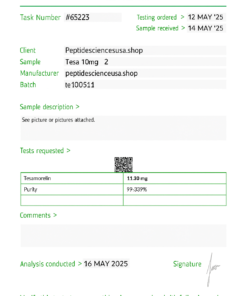
- Purity: ≥99% (HPLC verified)
- Molecular Formula: C₁₇H₂₂ClNO
- Molecular Weight: 291.82 g/mol
- Appearance: White to off-white powder in hard gelatin capsule
- Half-Life: Approximately 220 hours (supports once-daily dosing)
- Storage: Below 25°C, away from moisture and light
- Intended Use: Research and laboratory purposes only
Why Choose Our Tesofensine 500mcg?
Our Tesofensine 500mcg is manufactured using pharmaceutical-grade active pharmaceutical ingredient (API) with a purity of 99% or above, confirmed by independent HPLC analysis. Each batch is produced under GMP-aligned manufacturing conditions with full documentation, and every unit is independently tested before release to ensure dose accuracy, correct molecular identity, and absence of harmful impurities or residual solvents.
Our Quality Assurance Promise
- ≥99% purity confirmed by independent third-party HPLC analysis
- Pharmaceutical-grade API with verified molecular identity by mass spectrometry
- GMP-aligned manufacturing with documented batch records and full traceability
- Accurate dose encapsulation verified by content uniformity testing
- Tamper-evident sealed packaging with batch number and Certificate of Analysis on request
- Discreet, professional worldwide shipping in secure, light-protected packaging
- Knowledgeable customer support team experienced in metabolic research compound protocols
Frequently Asked Questions About Tesofensine 500mcg
Why was Tesofensine not approved despite strong clinical data?
Tesofensine’s Phase 2 TIPO-1 trial produced impressive weight loss data, but the compound’s development was affected by the regulatory climate for centrally acting anti-obesity agents following the withdrawal of sibutramine from global markets in 2010 due to cardiovascular concerns. Regulatory agencies became considerably more cautious about approving CNS-acting weight loss drugs, requiring extensive cardiovascular outcome trial data before approval — a requirement that significantly increases the cost and timeline of development. Tesofensine has since been approved in some Latin American markets and continues to be developed internationally, but has not yet achieved FDA or EMA approval.
How does Tesofensine’s mechanism differ from GLP-1 agonists like semaglutide?
GLP-1 receptor agonists like semaglutide work peripherally and centrally through GLP-1 receptor activation — slowing gastric emptying, stimulating insulin secretion, and activating hypothalamic appetite centres through an incretin-based mechanism. Tesofensine works exclusively through central monoaminergic reuptake inhibition — elevating serotonin, dopamine, and noradrenaline in the brain to suppress appetite and increase energy expenditure. These are fundamentally different mechanisms with different side-effect profiles, onset kinetics, and research applications. Their mechanistic orthogonality has prompted interest in combination research protocols.
What cardiovascular monitoring is recommended during Tesofensine research?
Due to Tesofensine’s noradrenergic sympathomimetic component, which can produce modest increases in heart rate (typically 3–8 bpm at the 500mcg dose in Phase 2) and minor elevations in systolic blood pressure, cardiovascular baseline assessment and periodic monitoring throughout any research protocol is strongly recommended. The cardiovascular signal at 500mcg was considerably more favourable than at the 1mg dose in Phase 2, which is one reason the 500mcg dose is considered the optimal research dose. Individuals with pre-existing cardiovascular conditions, hypertension, or tachycardia should not be included in research protocols without appropriate medical oversight.
Be the first to review “Tesofensine Buy Online”
Related products
Peptide
Peptide

Peptide
Peptide
Peptide
Peptide

Peptide

Peptide

Reviews
There are no reviews yet.