Epithalon 10mg — The Pioneer Telomerase-Activating Tetrapeptide for Longevity, Cellular Rejuvenation, and Anti-Aging Research
Epithalon (also written Epitalon or Epithalone) is a synthetic tetrapeptide composed of four amino acids — Ala-Glu-Asp-Gly — originally isolated from the bovine pineal gland extract called Epithalamin. Developed by the renowned Russian gerontologist Professor Vladimir Khavinson at the St. Petersburg Institute of Bioregulation and Gerontology, Epithalon represents over four decades of scientific research into biological aging, telomere biology, and peptide bioregulation. As one of the most extensively studied longevity peptides in existence, Epithalon 10mg has become a cornerstone compound in anti-aging research, with a body of preclinical and clinical evidence supporting its remarkable capacity to activate telomerase, lengthen telomeres, regulate circadian rhythms, enhance immune function, and restore youthful melatonin production.
What Is Epithalon 10mg?
Epithalon is a tetrapeptide — a short chain of four amino acids (Alanine-Glutamic acid-Aspartic acid-Glycine) — that acts as a biological regulator of the pineal gland and a potent activator of the enzyme telomerase. Telomerase is the enzyme responsible for maintaining and extending telomeres, the protective caps at the ends of chromosomes that shorten with each cell division. As telomeres progressively shorten over a lifetime, cells lose the ability to replicate accurately and eventually enter a senescent or apoptotic state. This process of telomere shortening is widely recognized as one of the most fundamental drivers of biological aging.
By activating telomerase and stimulating telomere elongation, Epithalon intervenes at the most fundamental level of cellular aging. It does not merely mask the symptoms of aging — it addresses one of the core molecular mechanisms responsible for it. This unique mechanism distinguishes Epithalon from virtually every other anti-aging compound currently available and makes it a subject of intense ongoing research in gerontology, oncology, immunology, and regenerative medicine.
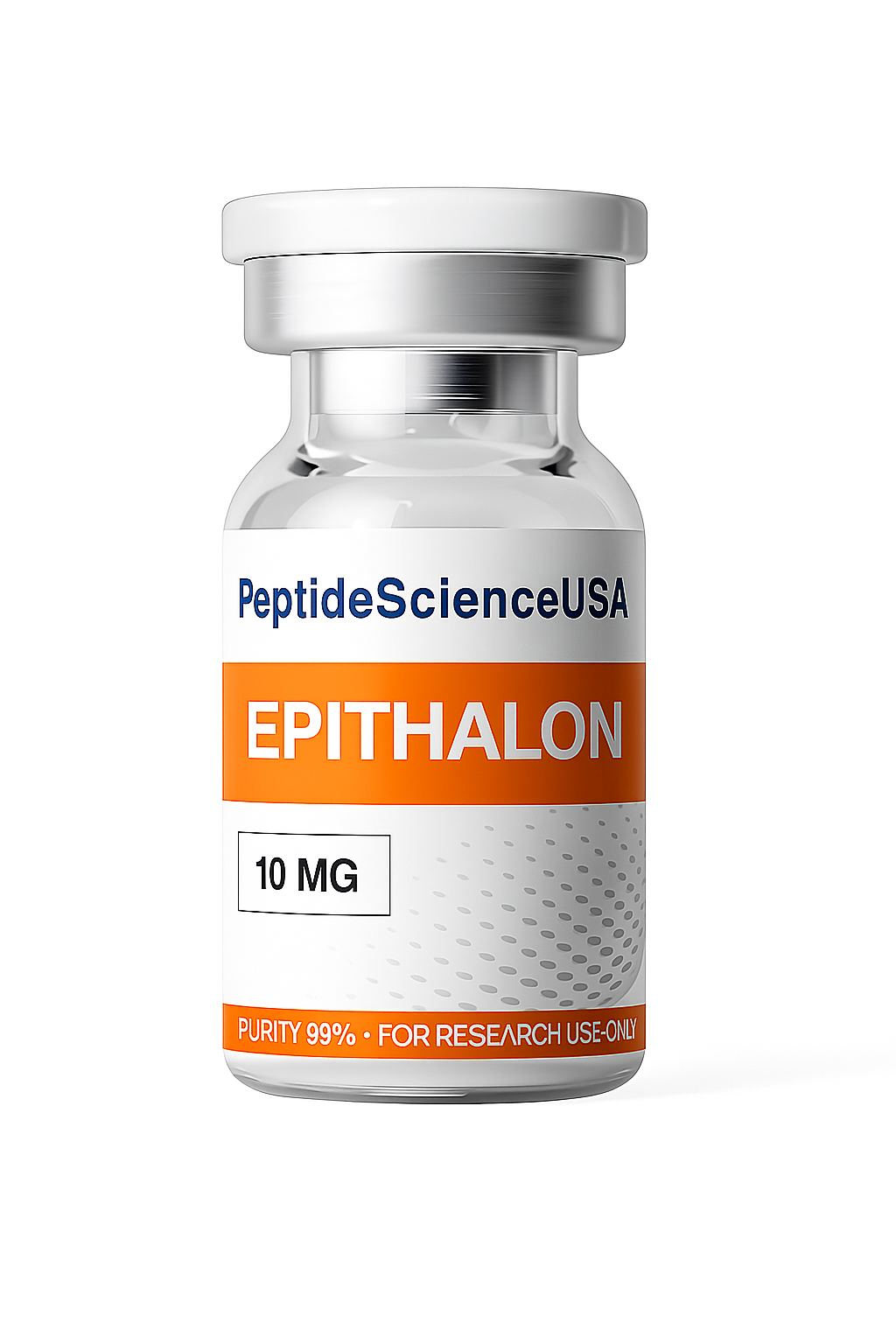
Each vial of our Epithalon 10mg contains a precise lyophilized dose of the tetrapeptide, manufactured under strict quality controls to ensure purity, potency, and batch consistency.
The Science Behind Epithalon — Telomeres, Telomerase, and Aging
Understanding Telomeres and Cellular Aging
Every human cell contains 46 chromosomes, each capped at both ends by telomeres — repetitive nucleotide sequences (TTAGGG in humans) that protect the genetic material within chromosomes from degradation and end-to-end fusion. Think of telomeres as the protective plastic tips on shoelaces: they prevent chromosomes from fraying or fusing with other chromosomes. With each cell division, telomeres lose approximately 50–200 base pairs of their length. Over decades of life, this progressive shortening leads to critically short telomeres, which trigger cellular senescence or apoptosis and contribute to the tissue dysfunction and organ decline associated with aging.
Telomere length is therefore considered one of the most reliable biological clocks and markers of biological age. Individuals with longer telomeres for their chronological age tend to demonstrate greater healthspan, resilience to disease, and longevity. Conversely, accelerated telomere shortening has been associated with cardiovascular disease, diabetes, neurodegeneration, immune dysfunction, and all-cause mortality.
Telomerase — The Enzyme That Reverses the Clock
Telomerase is a reverse transcriptase enzyme that adds telomeric sequences back to the ends of chromosomes, effectively reversing or slowing the attrition of telomere length. In most adult somatic cells, telomerase activity is very low or absent, allowing telomere shortening to proceed unchecked. Stem cells, germline cells, and certain immune cells retain meaningful telomerase activity, which is one reason these cell populations maintain their regenerative capacity over a lifetime.
Epithalon activates telomerase in somatic cells — cells that would otherwise lack this self-renewal capability. Landmark research published by Khavinson and colleagues demonstrated that Epithalon treatment resulted in statistically significant increases in telomerase activity and measurable telomere elongation in human fetal fibroblast cell lines, allowing cells to undergo more divisions beyond their normal Hayflick limit. These findings represent some of the strongest evidence that a peptide compound can meaningfully modulate telomere biology in human cells.
Epithalon’s Influence on the Pineal Gland and Melatonin
The pineal gland plays a central role in regulating circadian rhythms, sleep-wake cycles, and the aging process through its primary hormone, melatonin. As humans age, pineal gland calcification and declining melatonin production disrupt circadian rhythms, impair sleep quality, suppress immune function, and accelerate oxidative damage. This decline in pineal function is considered a master regulator of biological aging.
Epithalon was originally derived from the pineal gland extract Epithalamin and retains the ability to stimulate and restore pineal gland function. Research has consistently shown that Epithalon administration restores melatonin secretion to more youthful levels in aged subjects, re-synchronizes circadian rhythms, improves sleep architecture, and reduces the oxidative stress associated with disrupted melatonin cycles. This makes Epithalon one of the very few compounds that can address aging simultaneously at both the cellular level (telomeres) and the systemic circadian-endocrine level (pineal-melatonin axis).
Key Benefits of Epithalon 10mg
1. Telomere Elongation and Cellular Longevity
Epithalon’s most defining property is its ability to activate telomerase and stimulate telomere elongation in human cells. By extending the replicative lifespan of cells, Epithalon helps maintain tissue regeneration and organ function at a cellular level. Researchers have observed that human cells treated with Epithalon were able to complete significantly more population doublings compared to untreated control cells, demonstrating a clear extension of cellular lifespan beyond the normal Hayflick limit.
2. Restoration of Melatonin Production and Circadian Rhythm
Epithalon stimulates the pineal gland to restore melatonin secretion to levels comparable to those seen in younger individuals. Normalized melatonin levels improve sleep quality, regulate the sleep-wake cycle, reduce oxidative stress systemically, and enhance the immune surveillance that occurs during deep sleep. For individuals with disrupted sleep patterns related to aging, shift work, or chronic stress, Epithalon offers a mechanism-based approach to restoring healthy circadian biology.
3. Immunomodulation and Enhanced Immune Surveillance
Aging is accompanied by a well-documented decline in immune function known as immunosenescence — a state characterized by reduced T-cell proliferation, declining natural killer (NK) cell activity, and impaired antibody responses. Epithalon has demonstrated significant immunomodulatory properties in research settings, including restoration of T-lymphocyte activity, improved NK cell function, and normalization of cytokine profiles. These effects suggest Epithalon may help counteract immunosenescence and restore robust immune surveillance in aging subjects.
4. Antioxidant Activity and Reduction of Oxidative Stress
Oxidative stress — the imbalance between reactive oxygen species (ROS) production and the body’s antioxidant defenses — is a central driver of aging and age-related disease. Epithalon has been shown in multiple studies to reduce markers of oxidative stress, including lipid peroxidation byproducts and 8-hydroxy-2-deoxyguanosine (8-OHdG), a marker of oxidative DNA damage. By reducing oxidative burden at the cellular level, Epithalon helps protect the integrity of DNA, proteins, and cellular membranes.
5. Anti-Tumor and Cancer Suppression Properties
One of the most compelling areas of Epithalon research involves its anti-tumor effects. In animal studies using spontaneously tumor-prone mice, Epithalon significantly reduced the frequency of malignant tumor development, inhibited tumor growth rates, and extended survival compared to untreated controls. Researchers attribute these effects to Epithalon’s ability to restore normal p53 tumor suppressor gene expression, reduce oncogene activity, and re-normalize the cell cycle checkpoints that become dysregulated in aging tissues. These findings position Epithalon as a subject of growing interest in oncological prevention research.
6. Neuroprotection and Cognitive Health
Epithalon exerts neuroprotective effects that are relevant to age-related cognitive decline and neurodegenerative conditions. Research has demonstrated that Epithalon helps maintain neuronal membrane integrity, reduces neuroinflammation markers, and supports the survival of dopaminergic neurons. In aged animal models, Epithalon treatment has been associated with preserved spatial memory, improved learning performance, and protection against age-related neuronal loss in key brain regions.
7. Retinal Protection and Vision Preservation
The retina is one of the most metabolically active tissues in the body and highly vulnerable to age-related degeneration. Epithalon has been studied specifically for its ability to protect photoreceptor cells in the retina. In animal models of retinal degeneration, Epithalon treatment significantly preserved photoreceptor viability, delayed structural deterioration of rod and cone cells, and protected retinal morphology. These findings have drawn interest in the potential application of Epithalon in age-related macular degeneration (AMD) research.
Research History and Clinical Evidence
Four Decades of Scientific Investigation
Epithalon is one of the most rigorously studied peptides in the field of biogerontology. The research program initiated by Professor Khavinson and the St. Petersburg Institute of Bioregulation and Gerontology spans more than 40 years and encompasses hundreds of peer-reviewed publications, preclinical animal studies, and human clinical trials. This depth of research is virtually unprecedented for a longevity peptide and lends Epithalon a level of scientific credibility that most anti-aging compounds cannot claim.
Notable Findings from Peer-Reviewed Research
Key findings from the published literature include:
- Telomere elongation and increased telomerase activity in human somatic cells (Khavinson et al., 2003)
- Extension of maximum lifespan by 13–68% in various animal model studies
- Reduction of spontaneous tumor incidence by up to 2.4-fold in tumor-prone mice
- Restoration of melatonin secretion and normalization of circadian rhythms in aged subjects
- Significant improvement in immune function markers including T-cell and NK cell activity
- Preservation of retinal photoreceptor morphology in models of retinal dystrophy
- Reduction of oxidative DNA damage markers in treated subjects versus controls
Research Dosage and Administration Protocols
Epithalon is available as a lyophilized powder for reconstitution. It is administered via subcutaneous or intravenous injection in research settings. The following dosage information is based on published research protocols and researcher community data:
- Standard Research Dose: 5–10mg per day via subcutaneous injection
- Cycle Length: 10–20 days per course, repeated 1–2 times per year
- Reconstitution: Reconstitute with 1–2ml of bacteriostatic water for injection
- Storage: Lyophilized powder stable at -20°C for up to 24 months; store reconstituted solution at 2–8°C and use within 14 days
- Injection Timing: Research protocols commonly use morning or evening administration
- Popular Protocol: 10mg/day for 10 consecutive days (100mg total per course), repeated twice yearly
Product Specifications
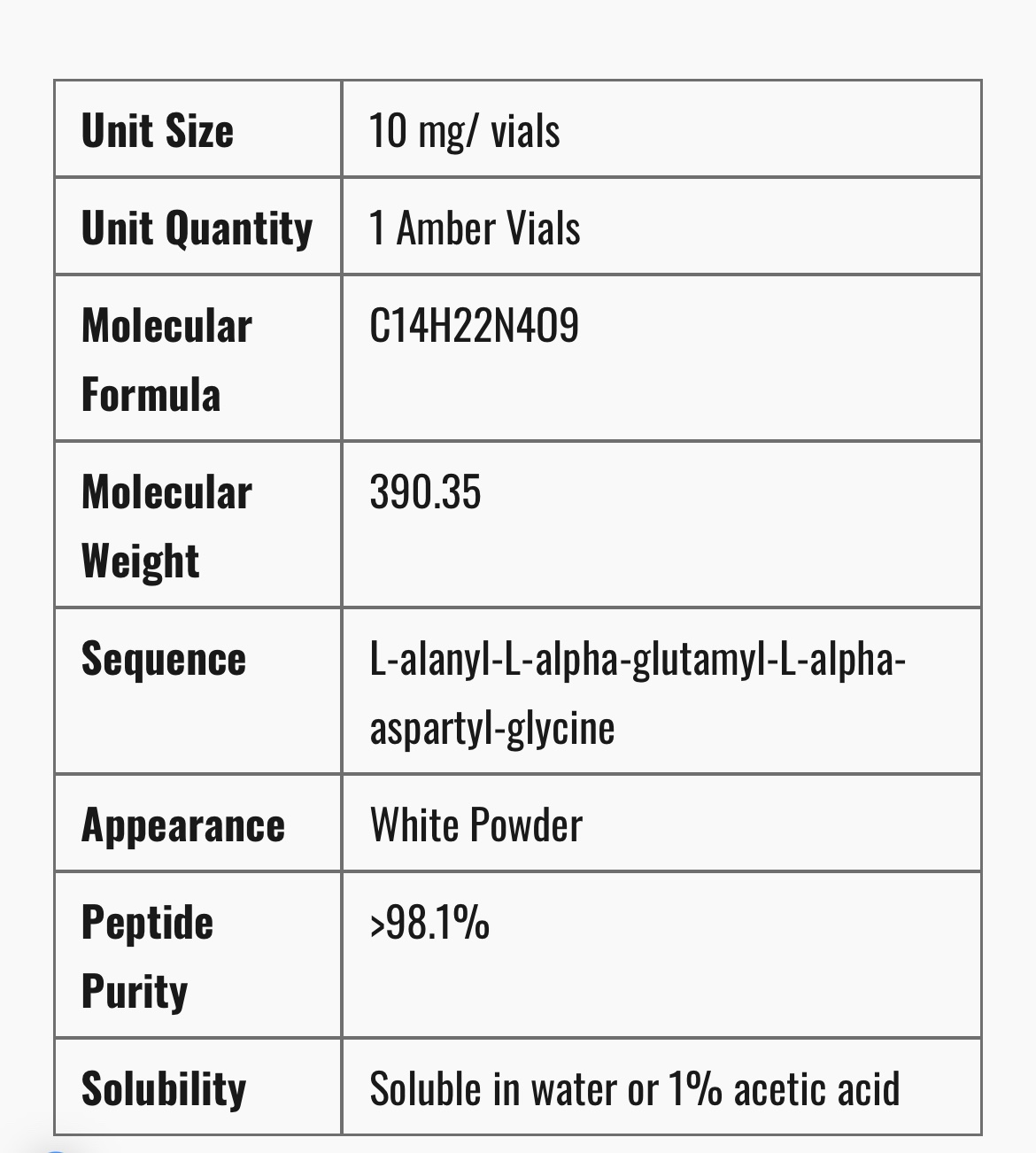
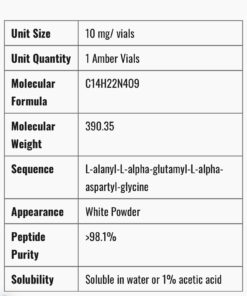
- Peptide Name: Epithalon (Epitalon / Epithalone)
- Sequence: Ala-Glu-Asp-Gly (tetrapeptide)
- CAS Number: 307297-39-8
- Molecular Formula: C₁₄H₂₂N₄O₉
- Molecular Weight: 390.35 g/mol
- Vial Size: 10mg lyophilized powder
- Purity: ≥98% (HPLC and mass spectrometry verified)
- Appearance: White to off-white lyophilized powder
- Solubility: Soluble in bacteriostatic water or sterile saline
- Intended Use: Research and laboratory purposes only
Epithalon vs Other Longevity Peptides — How Does It Compare?
The longevity peptide landscape includes several notable compounds — including BPC-157, TB-500, GHK-Cu, and MOTS-c — each with its own mechanism and research profile. What distinguishes Epithalon from virtually all of them is its direct action on telomere biology and its uniquely extensive human clinical research base spanning four decades.
- Epithalon vs BPC-157: BPC-157 excels at tissue repair and gut healing; Epithalon targets telomere biology and systemic aging at the chromosomal level
- Epithalon vs GHK-Cu: GHK-Cu is a copper peptide with skin regeneration and wound healing properties; Epithalon operates deeper — at the cellular aging and immune system level
- Epithalon vs Thymalin: Both are Khavinson peptides from the same research program; Thymalin targets the thymus and immune system specifically, while Epithalon has broader systemic anti-aging effects
- Epithalon vs Rapamycin: Rapamycin inhibits mTOR and has longevity data; Epithalon activates telomerase — the two work through entirely different and potentially complementary mechanisms
- Epithalon vs NMN/NR: NAD+ precursors support mitochondrial function; Epithalon addresses the upstream chromosomal clock — both are active areas in longevity research
Why Choose Our Epithalon 10mg?
When investing in a peptide with as much scientific significance as Epithalon, purity and manufacturing quality are non-negotiable. Our Epithalon 10mg is synthesized using advanced Fmoc solid-phase peptide synthesis (SPPS) technology with rigorous quality control at every production stage. Every batch is independently verified by third-party laboratories using both HPLC chromatography and mass spectrometry analysis to confirm sequence identity, purity, and accurate dosing.
Our Quality Commitment
- ≥98% purity confirmed by independent third-party HPLC and mass spectrometry
- Correct tetrapeptide sequence (Ala-Glu-Asp-Gly) verified by mass spec analysis
- Sterile filtration and lyophilization under GMP-aligned controlled conditions
- Tamper-evident sealed vials with full batch number, lot traceability, and CoA availability
- Cold-chain compatible packaging to maintain peptide integrity during transit
- Discreet worldwide shipping with temperature-controlled protective packaging
- Expert customer support team with deep knowledge of peptide research protocols
Frequently Asked Questions About Epithalon 10mg
Is Epithalon the same as Epitalon?
Yes. Epithalon, Epitalon, and Epithalone are all names referring to the same tetrapeptide compound (Ala-Glu-Asp-Gly). The naming variation arises from transliteration differences between Russian and English, as the peptide was developed and named in Russian-language scientific literature by Professor Khavinson’s research group.
How is Epithalon different from Epithalamin?
Epithalamin is a natural polypeptide complex extracted from the bovine pineal gland, containing multiple peptide fractions with biological activity. Epithalon is the synthetic, isolated tetrapeptide that was identified as the primary active component responsible for Epithalamin’s anti-aging effects. Being a defined, pure synthetic compound, Epithalon offers greater consistency, purity, and reproducibility in research settings compared to the natural bovine extract.
Can Epithalon be stacked with other peptides?
In research settings, Epithalon is frequently studied alongside other bioregulatory peptides such as Thymalin (thymus peptide), Vilon, and Pinealon. These stacking protocols are based on the multi-organ bioregulation approach developed by Khavinson’s group, which proposes that comprehensive anti-aging effects require coordinated modulation of multiple tissue-specific peptide systems simultaneously. Researchers exploring combination protocols should review the relevant literature before designing study parameters.
What is the Hayflick Limit and how does Epithalon relate to it?
The Hayflick Limit, named after biologist Leonard Hayflick, refers to the finite number of times a normal human somatic cell can divide before entering replicative senescence — typically 50–70 divisions. This limit is directly tied to telomere shortening: once telomeres become critically short, cells stop dividing. Epithalon’s ability to activate telomerase and elongate telomeres has been shown in research to extend the number of cell divisions beyond the normal Hayflick Limit, effectively extending the replicative lifespan of treated cells.
5 reviews for Epithalon 10mg
Add a review
Related products
Peptide
Peptide
Peptide
Peptide

Peptide
Peptide
Peptide
Peptide
Mark T. –
I’ve been using Epithalon for a few weeks now, mainly for sleep support. I’ve noticed I fall asleep faster and wake up feeling more refreshed.
Olivia H. –
Good quality product. My energy levels during the day feel more stable, especially compared to before I started using it.
Daniel R. –
Took about two weeks before I noticed any changes, but now I feel like my recovery after workouts has improved.
Jessica L. –
Shipping was fast and discreet. The product seems legit, and I haven’t experienced any side effects so far.
Kevin B. –
Subtle but positive effects. Sleep quality and overall well-being feel slightly better.