Fragment 176-191 (5mg | 10mg) — The Precision Peptide for Targeted Fat Loss & Metabolic Optimization
Fragment 176-191 is a synthetic peptide derived from the C-terminal end of Human Growth Hormone (HGH), specifically comprising amino acid residues 176 through 191 of the 191-amino acid HGH sequence. Often referred to as HGH Frag 176-191, AOD 9604, or simply the HGH fat loss fragment, this highly targeted peptide has attracted significant attention in the research and sports science communities for its remarkable ability to stimulate lipolysis — the breakdown of stored body fat — without the broad hormonal side effects associated with full-length Human Growth Hormone administration.
Available in both 5mg and 10mg vial presentations, Fragment 176-191 offers researchers and advanced users the flexibility to work across a range of experimental protocols. Whether you are exploring the peptide’s dose-response relationship in metabolic research, investigating its effects on adipose tissue regulation, or studying its interaction with beta-3 adrenergic receptors, Fragment 176-191 represents one of the most selective and mechanistically fascinating peptides in the modern research landscape.
What Is Fragment 176-191? Structure, Origin & Mechanism
Fragment 176-191 is a 16-amino acid peptide isolated from the lipolytic domain of Human Growth Hormone. Early researchers studying the structure-function relationship of HGH discovered that the full molecule’s fat-mobilizing activity was concentrated in its C-terminal tail region — specifically between residues 176 and 191. By isolating and synthesizing this fragment independently, scientists produced a peptide that retains HGH’s potent lipolytic properties while lacking the insulin-desensitizing and proliferative effects of the intact hormone.
The Molecular Mechanism of Action
Fragment 176-191 exerts its primary effects through selective interaction with beta-3 adrenergic receptors found predominantly on adipocytes (fat cells). Activation of these receptors triggers the intracellular cAMP signaling cascade, which in turn activates hormone-sensitive lipase (HSL) — the enzyme responsible for breaking stored triglycerides down into free fatty acids and glycerol that can be released into the bloodstream and oxidized for energy. Crucially, this mechanism operates independently of the GH receptor pathway, meaning Fragment 176-191 does not trigger IGF-1 elevation, insulin resistance, or cell proliferation.
Research has also suggested that Fragment 176-191 may exert anti-hyperglycemic properties, potentially improving insulin sensitivity in certain metabolic contexts — a finding that adds further dimensionality to its profile as a metabolic research compound. Additionally, some studies indicate the peptide may inhibit the formation of new fat cells (adipogenesis) by modulating the differentiation of pre-adipocyte stem cells.
Fragment 176-191 vs. Full-Length HGH: Key Differences
The critical distinction between Fragment 176-191 and intact HGH lies in selectivity. Full-length HGH stimulates both growth (via IGF-1) and fat breakdown simultaneously, which can produce unwanted side effects including fluid retention, carpal tunnel syndrome, insulin resistance, and potential cellular proliferation. Fragment 176-191 delivers only the lipolytic signal — making it a far more targeted research tool for studying isolated fat metabolism pathways without confounding growth hormone effects.
Research Applications & Observed Effects of Fragment 176-191
1. Targeted Lipolysis & Visceral Fat Reduction
The most extensively studied property of Fragment 176-191 is its capacity to stimulate localized and systemic lipolysis. In preclinical research, the fragment has demonstrated the ability to reduce total body fat mass — with particular efficacy against metabolically active visceral adipose tissue. Studies in obese animal models have shown statistically significant reductions in fat accumulation relative to controls, with effects observed at relatively low doses and without corresponding weight gain in lean tissue.
2. Anti-Obesity & Metabolic Regulation Research
Fragment 176-191 has been studied as a candidate compound in anti-obesity research due to its dual action: promoting fat oxidation while simultaneously inhibiting lipogenesis (new fat synthesis). Its selectivity for beta-3 receptors — which are highly expressed in brown adipose tissue — suggests potential applications in research models studying thermogenesis and non-shivering heat production, both of which are relevant to the treatment of obesity and metabolic syndrome.
3. Insulin Sensitivity & Glucose Metabolism
Unlike full HGH, which can impair insulin signaling at higher doses, Fragment 176-191 appears to have a neutral to mildly beneficial effect on insulin sensitivity in research models. This makes it a valuable comparison compound in metabolic studies, particularly when researchers seek to disentangle the lipolytic effects of HGH from its diabetogenic properties. Some in vitro and animal studies have reported improved glucose uptake in the presence of the fragment, although further clinical investigation remains ongoing.
4. Cartilage & Bone Research
Emerging research has begun to explore the potential of Fragment 176-191 beyond fat metabolism. Preliminary findings suggest the peptide may promote cartilage regeneration and support the maintenance of bone mineral density, possibly through mechanisms distinct from the classical IGF-1 pathway. While this area of investigation is at an earlier stage than its metabolic applications, it opens interesting possibilities for Fragment 176-191 in musculoskeletal research protocols.
Product Specifications: Fragment 176-191 5mg & 10mg Vials
Technical Specifications
- Peptide sequence: Tyr-Leu-Arg-Ile-Val-Gln-Cys-Arg-Ser-Val-Glu-Gly-Ser-Cys-Gly-Phe
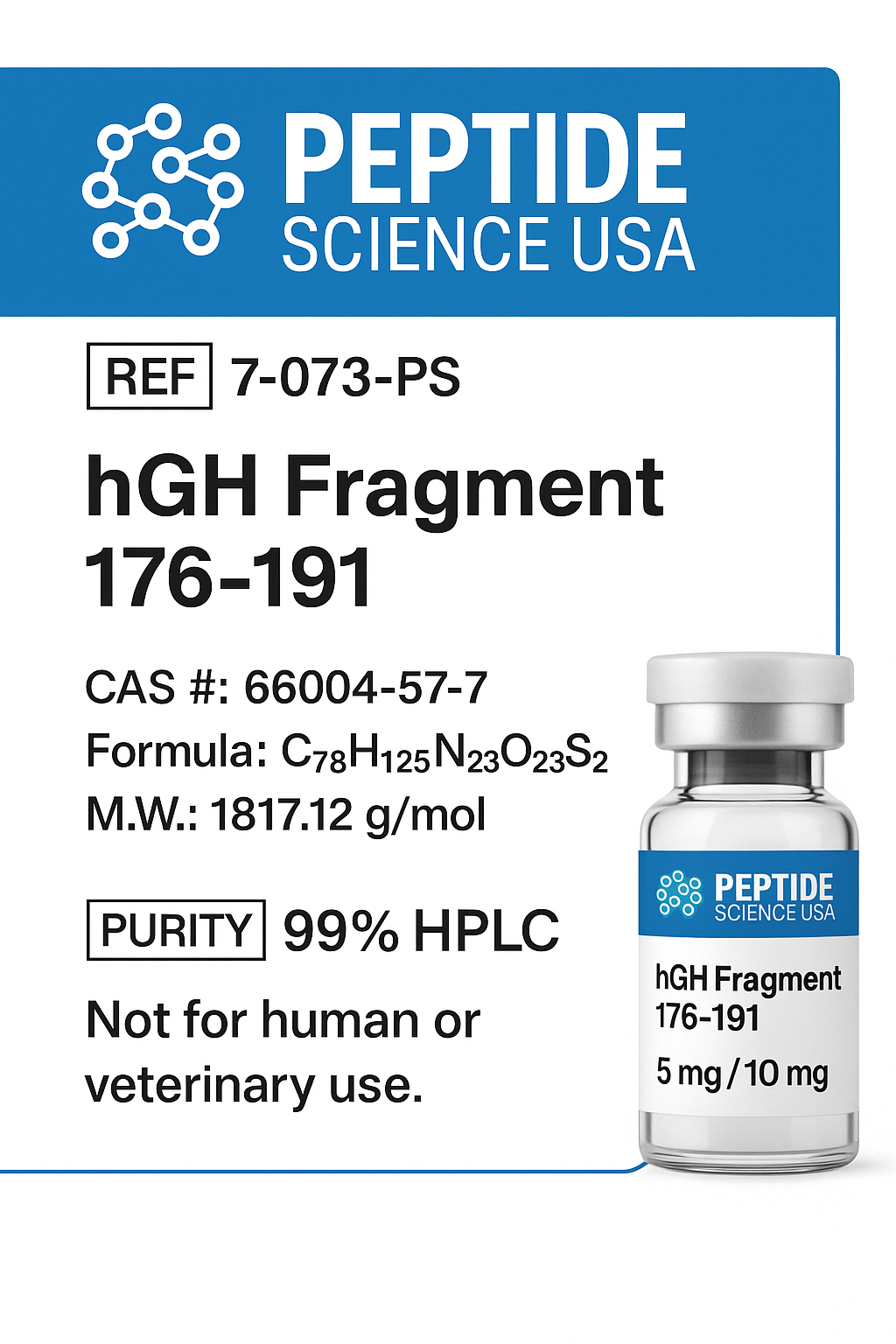
- Molecular formula: C78H125N23O23S2
- Molecular weight: 1817.12 g/mol
- Presentation: Lyophilized (freeze-dried) white powder
- Available vial sizes: 5mg and 10mg
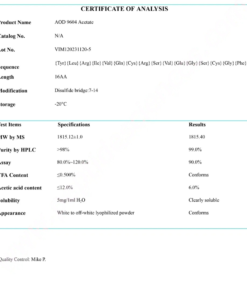
- Purity: ≥99% (HPLC verified)
- Storage: 2–8°C (refrigerated); protect from light and moisture
- Reconstitution: Bacteriostatic water or sterile saline recommended
- Shelf life: 24 months from manufacture date (lyophilized, sealed)
Quality Assurance
Every batch of Fragment 176-191 is manufactured under stringent quality control standards and subjected to independent third-party analytical testing. Certificates of Analysis (CoA) confirming peptide identity, sequence accuracy, purity by HPLC, and sterility are available upon request. Our commitment to analytical integrity ensures that each vial contains precisely what is stated — no less, no more.
Research Use Notice
Fragment 176-191 is supplied strictly for in vitro and laboratory research purposes. It is not intended for human or veterinary use, is not a medicinal product, and has not received approval for therapeutic administration by any regulatory authority. All handling, storage, and use must comply with applicable local regulations governing research peptides.
Why Source Fragment 176-191 From Us?
In a market where peptide quality varies dramatically between suppliers, sourcing integrity is everything. Our Fragment 176-191 is synthesized using solid-phase peptide synthesis (SPPS) with Fmoc chemistry, then purified by reverse-phase HPLC to achieve the highest possible purity grades. Each lot is independently verified by accredited analytical laboratories, and full CoA documentation accompanies every order.
We offer both 5mg and 10mg vial formats to accommodate a wide range of research scales — from exploratory pilot studies requiring smaller quantities to larger experimental protocols demanding greater volume. Fast, discreet, and reliable fulfilment ensures your research timelines are never compromised.
Precision peptides. Verified purity. Reliable research support.
| Quantity | 5mg * 10 vials, 10mg * 10 vials |
|---|
4 reviews for Fragment 176-191 5mg | 10mg
Add a review
Related products
Peptides
Peptides
Peptides
Peptides
Peptides
Peptides
Dylan Matthews –
Saw faster fat loss in the lower belly and love handles. Definitely doing another cycle.
Aaron Grant –
This peptide helped break through a plateau. Leaner without strength drop
Melissa Ward –
Gentle but noticeable fat reduction. No side effects at all
Zachary Simmons –
Good for trimming down. More effective than expected in short time frame