
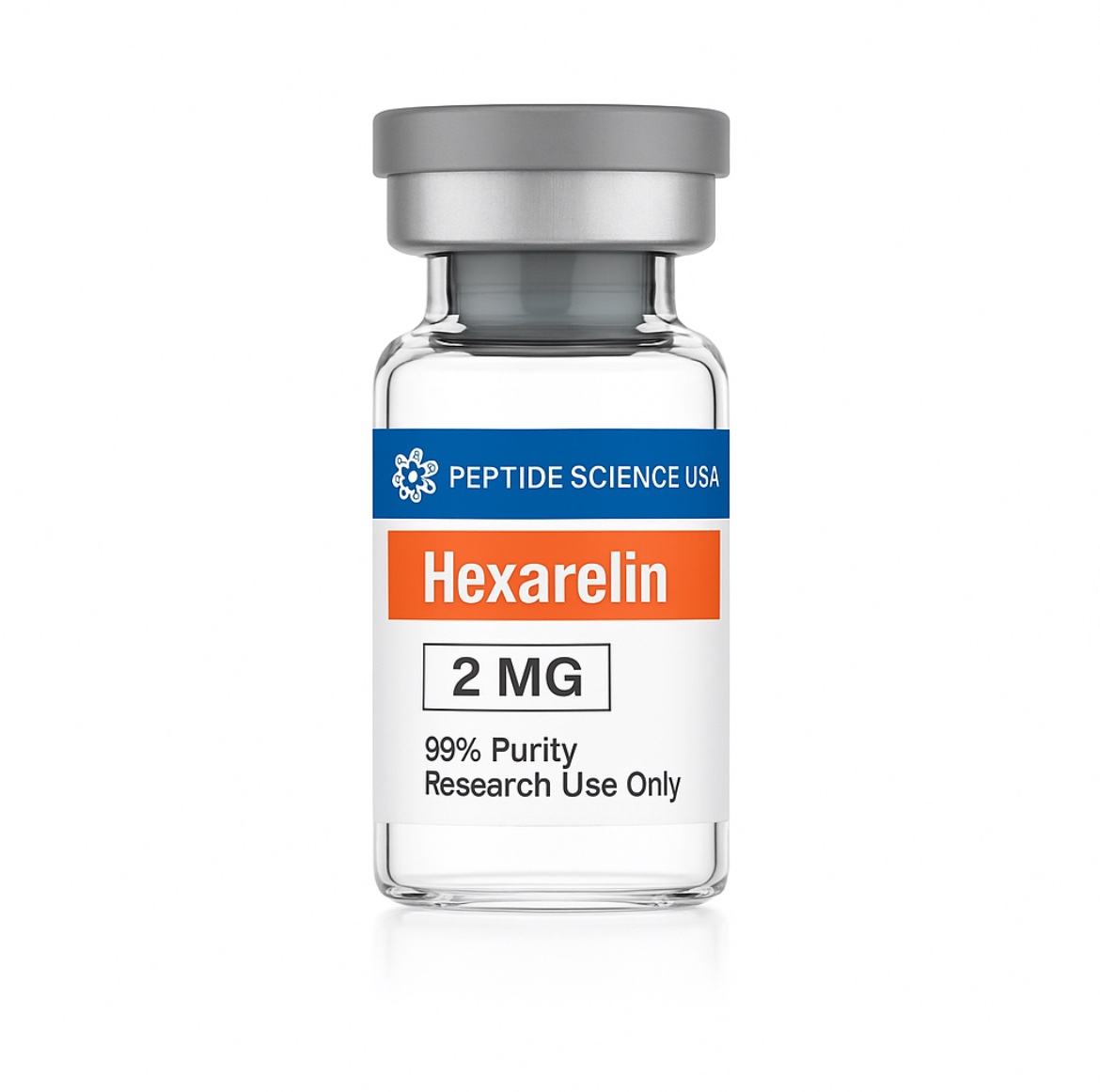
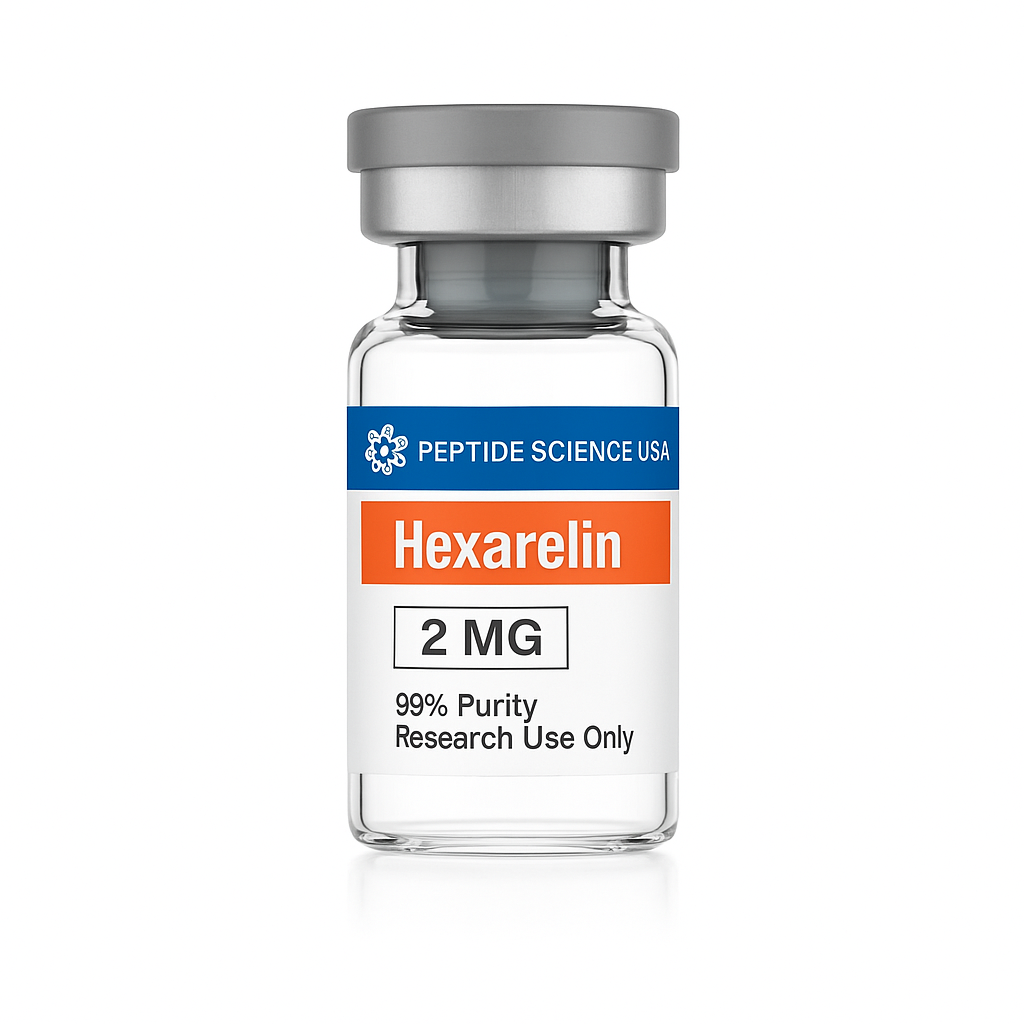
Hexarelin Acetate 2mg The Most Potent GHRP Peptide for Maximum Growth Hormone Release, Muscle Growth, Cardiac Protection, and Body Composition Research
Hexarelin Acetate 2mg is widely regarded as the most potent growth hormone-releasing peptide (GHRP) ever synthesised. A member of the hexapeptide family of growth hormone secretagogues, Hexarelin stimulates the pituitary gland to release growth hormone (GH) through a mechanism that is both more powerful and more sustained than any other GHRP in its class. Originally developed by Europeptides in Italy during the 1990s, Hexarelin’s extraordinary GH-stimulating potency — surpassing GHRP-2, GHRP-6, Ipamorelin, and all other peptidergic GH secretagogues in head-to-head comparisons — combined with its unique and independently researched cardioprotective properties, have established it as one of the most scientifically significant and multifunctional growth hormone peptides in the research canon. Each vial of Hexarelin Acetate 2mg delivers a precisely dosed lyophilized preparation of this exceptional hexapeptide, manufactured to the highest purity standards for rigorous research applications.
What Is Hexarelin Acetate 2mg?
Hexarelin (also known as Examorelin) is a synthetic hexapeptide with the amino acid sequence His-D-2MeTrp-Ala-Trp-D-Phe-Lys-NH2. It is a structural analogue of GHRP-6, engineered with specific amino acid substitutions — particularly the incorporation of 2-methyl-tryptophan — that dramatically enhance its binding affinity and agonist potency at the growth hormone secretagogue receptor (GHS-R1a, also known as the ghrelin receptor). These structural modifications make Hexarelin the most potent known agonist at the GHS-R1a receptor among all synthetic GHRPs, producing the highest magnitude of pituitary GH secretion of any compound in this class.
The GHS-R1a receptor through which Hexarelin acts is the endogenous receptor for ghrelin — the gut-derived hunger hormone that also plays a critical role in GH regulation, cardiac function, energy homeostasis, and neuroprotection. Because Hexarelin is a direct receptor agonist at GHS-R1a with higher affinity than endogenous ghrelin itself, it activates the full breadth of this receptor system’s downstream signalling pathways with greater potency than any naturally occurring ligand. This receptor pharmacology underpins not only Hexarelin’s exceptional GH-stimulating capacity but also its remarkable cardiovascular and tissue-protective properties that extend well beyond simple growth hormone secretion.
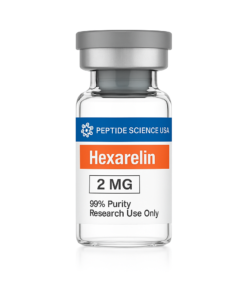
Each vial of Hexarelin Acetate 2mg contains 2mg of lyophilized hexapeptide, produced under controlled conditions with independent analytical verification of purity, sequence accuracy, and potency.
Mechanism of Action — How Hexarelin Stimulates Growth Hormone and Exerts Systemic Effects
GHS-R1a Receptor Agonism and Pituitary GH Secretion
Hexarelin’s primary mechanism of action involves high-affinity binding and agonist activation of the growth hormone secretagogue receptor type 1a (GHS-R1a), located abundantly in the pituitary gland, hypothalamus, heart, and multiple peripheral tissues. In the pituitary, GHS-R1a activation triggers a signalling cascade involving phospholipase C, inositol trisphosphate (IP3), and intracellular calcium mobilisation that stimulates somatotroph cells to synthesise and secrete growth hormone. Unlike GHRH (growth hormone-releasing hormone), which acts through a distinct receptor and cAMP-dependent pathway, Hexarelin’s GHS-R1a-mediated signalling operates through a calcium-dependent mechanism that is synergistic with GHRH — meaning combining Hexarelin with a GHRH analogue produces supra-additive GH release that neither compound achieves alone.
Hypothalamic GHRH Stimulation and Somatostatin Suppression
In addition to its direct pituitary action, Hexarelin acts at GHS-R1a receptors in the hypothalamus to stimulate the release of endogenous GHRH and to suppress somatostatin — the inhibitory hormone that normally restrains GH secretion. By simultaneously pushing on the accelerator (increasing GHRH) and lifting the brake (reducing somatostatin), Hexarelin produces a dual hypothalamic effect that amplifies pituitary GH release far beyond what direct pituitary stimulation alone would achieve. This dual central mechanism is one reason Hexarelin produces larger and more prolonged GH pulses than other GHRPs of equivalent dose.
Direct Cardiac GHS-R1a Activation and Cardioprotection
One of Hexarelin’s most scientifically distinctive properties is its direct action on GHS-R1a receptors expressed on cardiomyocytes — the contractile cells of the heart muscle. Unlike most GHRPs whose cardiac effects are indirect and mediated by elevated GH and IGF-1 levels, Hexarelin exerts GH-independent direct cardioprotective effects through myocardial GHS-R1a activation. Research has demonstrated that Hexarelin improves left ventricular contractility, enhances cardiac output, and protects cardiomyocytes from ischaemia-reperfusion injury and doxorubicin-induced cardiotoxicity through direct receptor-mediated mechanisms. This makes Hexarelin a compound of unique interest in cardiovascular protection research, independently of its growth hormone-related effects.
IGF-1 Upregulation and Downstream Anabolic Signalling
The growth hormone pulses stimulated by Hexarelin drive hepatic production of insulin-like growth factor 1 (IGF-1) — the primary anabolic mediator of GH’s tissue-building effects. IGF-1 activates the PI3K/Akt/mTOR signalling cascade in muscle, bone, and connective tissue, promoting protein synthesis, satellite cell activation, myofibril hypertrophy, and collagen production. The sustained and high-amplitude GH pulses produced by Hexarelin generate correspondingly robust IGF-1 elevations, making it one of the most effective peptidergic tools for studying anabolic signalling and tissue growth in research settings.
Key Benefits of Hexarelin Acetate 2mg
1. Maximum Growth Hormone Release — The Most Potent GHRP
In every published head-to-head comparison, Hexarelin has demonstrated greater GH stimulation than all other GHRPs at equivalent molar doses. Studies comparing Hexarelin directly against GHRP-2, GHRP-6, Ipamorelin, and Pralmorelin consistently show Hexarelin at the top of the GH-release hierarchy. This makes it the definitive reference compound for research requiring maximum GH secretion amplitude, and the most powerful tool available for studying pituitary GHS-R1a pharmacology and GH pulse physiology. For researchers exploring the upper limits of GHRP-stimulated GH release, Hexarelin represents the gold standard.
2. Superior Muscle Growth and Body Composition Improvement
Through sustained and high-amplitude GH and IGF-1 elevation, Hexarelin promotes a strongly anabolic environment that drives skeletal muscle hypertrophy, increases nitrogen retention, enhances protein synthesis rates, and accelerates satellite cell recruitment and myogenesis. In parallel, elevated GH and IGF-1 stimulate lipolysis in adipose tissue — particularly visceral fat — producing simultaneous improvements in lean mass and fat mass that result in a significantly improved body composition profile. Research subjects and animal models treated with Hexarelin demonstrate measurable improvements in muscle cross-sectional area, fibre type composition, and fat mass reduction compared to controls.
3. Direct Cardioprotection — A Unique Property Among GHRPs
Hexarelin is the only GHRP with an extensively documented, GH-independent direct cardioprotective mechanism. Multiple studies in animal models of cardiac ischaemia, heart failure, and chemotherapy-induced cardiomyopathy have demonstrated that Hexarelin protects cardiomyocytes from apoptosis, preserves left ventricular function, reduces infarct size following ischaemia-reperfusion injury, and improves cardiac output in models of dilated cardiomyopathy. These effects are mediated directly through myocardial GHS-R1a receptors and are present even when GH signalling is blocked — confirming that cardioprotection is a primary, GH-independent pharmacological property of Hexarelin rather than a secondary consequence of anabolic GH/IGF-1 elevation.
4. Enhanced Fat Loss and Visceral Adipose Tissue Reduction
Growth hormone is a potent lipolytic hormone that activates hormone-sensitive lipase in adipocytes, mobilising stored triglycerides for oxidation. The large and sustained GH pulses produced by Hexarelin drive significant fat mobilisation, with preferential effects on visceral and abdominal adipose tissue — the metabolically active fat depot most strongly associated with insulin resistance, cardiovascular risk, and metabolic syndrome. Research protocols using Hexarelin consistently demonstrate meaningful reductions in fat mass alongside lean mass gains, making it a particularly valuable compound for body composition research applications.
5. Accelerated Recovery, Tissue Repair, and Injury Healing
Elevated GH and IGF-1 levels produced by Hexarelin dramatically accelerate the repair and regeneration of soft tissues including muscle, tendon, ligament, and cartilage. IGF-1 activates fibroblast proliferation, collagen synthesis, and chondrogenesis — the processes responsible for the structural repair of connective tissue following injury. Athletes and researchers investigating tissue healing have long identified GH-stimulating peptides as among the most effective tools for accelerating recovery timelines. Hexarelin’s status as the most potent GH-stimulating GHRP makes it the strongest option in this context among all growth hormone secretagogue peptides.
6. Bone Density Enhancement and Skeletal Integrity
Growth hormone and IGF-1 are among the most critical regulators of bone metabolism, stimulating osteoblast proliferation, bone matrix synthesis, and the mineralisation of newly formed bone tissue. Hexarelin’s potent GH-stimulating activity drives IGF-1-mediated bone anabolic signalling, supporting increased bone mineral density, improved trabecular architecture, and enhanced skeletal strength. These properties are of significant interest in research addressing age-related bone loss, osteopenia, fracture healing, and the skeletal consequences of GH deficiency states.
7. Anti-Aging and GH Deficiency Research Applications
GH secretion declines markedly with age — a process called somatopause — contributing to the loss of muscle mass, increased fat accumulation, reduced bone density, impaired skin integrity, and diminished energy and cognitive function associated with aging. Hexarelin’s capacity to restore youthful GH pulse amplitude makes it a compound of considerable interest in anti-aging research, GH deficiency models, and the study of GH replacement strategies. Its potency relative to other GHRPs means that lower doses are required to achieve equivalent GH stimulation, potentially reducing the off-target effects associated with higher-dose GHRP administration.
Hexarelin vs Other GHRPs — The Growth Hormone Secretagogue Hierarchy
Understanding how Hexarelin compares to other GHRPs clarifies its unique research position and helps guide protocol selection:
- Hexarelin vs GHRP-2: GHRP-2 is the second most potent GHRP after Hexarelin, with strong GH stimulation and moderate cortisol/prolactin elevation. Hexarelin produces greater GH amplitude but both share similar cortisol/prolactin stimulatory profiles at higher doses
- Hexarelin vs GHRP-6: GHRP-6 is a classic GHRP with good GH stimulation and pronounced ghrelin-like appetite stimulation. Hexarelin is significantly more potent for GH release and has substantially lower appetite stimulation — a key practical difference in research design
- Hexarelin vs Ipamorelin: Ipamorelin is the most selective GHRP — minimal cortisol and prolactin stimulation with clean GH release. Hexarelin produces larger GH pulses but less selectively. For maximum GH amplitude, Hexarelin wins; for clean, controlled GH stimulation without hormonal co-stimulation, Ipamorelin is preferred
- Hexarelin vs MK-677 (Ibutamoren): MK-677 is an oral GHS-R1a agonist with sustained but lower-amplitude GH stimulation over 24 hours. Hexarelin produces higher peak GH pulses injected but requires subcutaneous administration — the two serve different research protocol requirements
- Hexarelin’s unique advantage: It is the only GHRP with documented direct GH-independent cardioprotective activity — a property that no other GHRP in its class possesses, making it irreplaceable in cardiovascular protection research
Research Dosage and Administration Protocols
Hexarelin Acetate 2mg is provided as a lyophilized powder for subcutaneous or intravenous injection following reconstitution. The following dosage information is based on published research literature and established research community protocols:
- Standard Research Dose: 100–200mcg per injection, administered subcutaneously
- Frequency: 1–3 times daily; GH pulse saturation occurs with very frequent dosing due to GHS-R1a desensitisation — 2–3 daily injections are commonly used with 3–6 hour intervals
- Desensitisation Note: Hexarelin produces GHS-R1a receptor desensitisation with continuous high-frequency use; cycling protocols (5 days on / 2 days off, or 4 weeks on / 2 weeks off) are recommended to preserve receptor sensitivity
- Reconstitution: Add 1–2ml bacteriostatic water to lyophilized powder; gently swirl — do not shake
- Storage: Lyophilized powder at -20°C for up to 24 months; reconstituted solution at 2–8°C, use within 14–21 days
- Synergistic Stacking: Commonly researched alongside GHRH analogues (CJC-1295, Sermorelin) for supra-additive GH release through complementary receptor mechanisms
- Optimal Timing: Pre-sleep and post-exercise injections align with natural GH pulse architecture for research protocols studying physiological GH augmentation
Product Specifications
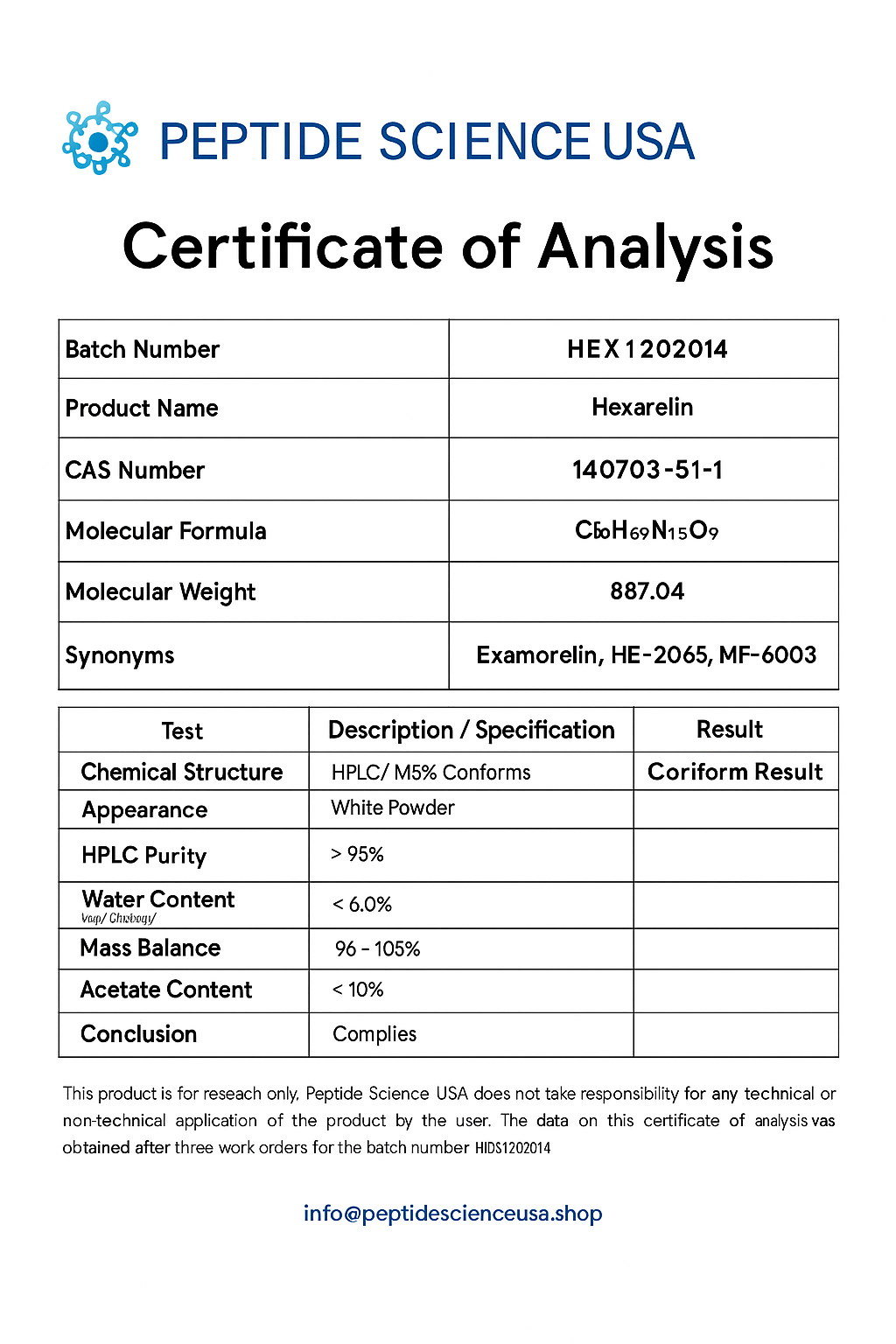
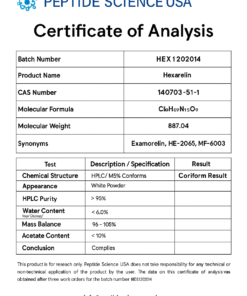
- Peptide Name: Hexarelin Acetate (Examorelin)
- Amino Acid Sequence: His-D-2MeTrp-Ala-Trp-D-Phe-Lys-NH₂
- CAS Number: 140703-51-1
- Molecular Formula: C₄₇H₅₈N₁₂O₆
- Molecular Weight: 887.04 g/mol
- Vial Size: 2mg lyophilized powder
- Purity: ≥98% (HPLC and mass spectrometry verified)
- Appearance: White to off-white lyophilized powder
- Solubility: Soluble in bacteriostatic water or sterile saline
- Storage: -20°C lyophilized; 2–8°C reconstituted
- Intended Use: Research and laboratory purposes only
Why Choose Our Hexarelin Acetate 2mg?
Given Hexarelin’s complex hexapeptide structure with non-standard amino acids including D-2-methyltryptophan and D-phenylalanine, synthesis quality is critically important. Low-purity or incorrectly synthesised Hexarelin will fail to achieve the GHS-R1a receptor binding affinity that defines this peptide’s exceptional potency, making analytical verification of sequence accuracy non-negotiable. Our Hexarelin Acetate 2mg is synthesised using Fmoc solid-phase peptide synthesis with D-amino acid incorporation, and every production batch is verified by independent third-party HPLC and mass spectrometry analysis to confirm the correct hexapeptide sequence, purity at 98% or above, and accurate acetate salt form.
Our Quality Standards
- ≥98% purity independently confirmed by third-party HPLC chromatography
- Correct hexapeptide sequence including D-amino acids verified by mass spectrometry
- Sterile filtration and lyophilization under GMP-aligned controlled manufacturing conditions
- Tamper-evident sealed vials with full batch traceability and Certificate of Analysis on request
- Cold-chain compatible packaging maintaining peptide integrity throughout international transit
- Discreet, professional worldwide shipping with temperature-protective cold-pack materials
- Expert customer support team with deep knowledge of GHRP and growth hormone peptide research
Frequently Asked Questions About Hexarelin Acetate 2mg
Why does Hexarelin cause desensitisation and how should it be managed?
GHS-R1a receptor desensitisation with Hexarelin occurs because of the receptor’s G-protein coupled receptor (GPCR) regulatory mechanisms — prolonged or very frequent agonist stimulation triggers receptor internalisation and downregulation, reducing the GH response to subsequent doses. This is a well-documented property of high-potency GHRP agonists and is more pronounced with Hexarelin than with lower-affinity GHRPs like Ipamorelin. Researchers can manage desensitisation through structured cycling protocols — such as 4 weeks on followed by 2 weeks off — or by limiting daily injection frequency to 1–2 administrations with adequate inter-dose intervals. Alternating Hexarelin with lower-affinity GHRPs during off cycles is a common research strategy for maintaining receptor sensitivity.
Is Hexarelin’s cardioprotective effect relevant at standard research doses?
Yes. Hexarelin’s direct cardiac GHS-R1a-mediated cardioprotective effects have been demonstrated at doses consistent with its GH-stimulating research doses. In multiple animal model studies, cardioprotective effects including improved left ventricular contractility, reduced cardiomyocyte apoptosis, and protection against ischaemia-reperfusion injury were documented at dose ranges that overlap with standard GH-stimulating protocols. This means that research protocols designed primarily to study Hexarelin’s anabolic and GH-releasing properties are simultaneously capturing potential cardiac protective effects — making Hexarelin uniquely multifunctional compared to any other GHRP.
How does Hexarelin compare to GHRH analogues like CJC-1295 or Sermorelin?
GHRH analogues (CJC-1295, Sermorelin, Tesamorelin) and GHRPs (Hexarelin, GHRP-2, Ipamorelin) act through entirely different receptors and mechanisms. GHRH analogues bind GHRH receptors on somatotrophs and stimulate GH through cAMP/PKA signalling. Hexarelin binds GHS-R1a and stimulates GH through IP3/calcium signalling. Because these pathways are synergistic, combining Hexarelin with a GHRH analogue produces supra-additive GH release that significantly exceeds what either compound achieves alone. This combination protocol is one of the most widely studied in growth hormone secretagogue research and represents a particularly productive research model for studying maximal GH axis stimulation
| Quantity | 2mg * 10 vials, 5mg * 10 vials |
|---|
5 reviews for Hexarelin Acetate
Add a review
Related products
Peptides
Peptides
Peptides
Peptides
Peptides
Peptide
Lucas Turner –
Noticeable increase in strength and lean mass. Great GH stimulator.
Sofia Rivera –
Worked faster than I expected. Sleep and recovery both improved
Adam Barnes –
Using this for GH pulse study—consistent spikes and well tolerated
Nicole Perry –
Felt tighter, more defined within 10 days. Will cycle again
Jacob Flores –
One of the most effective secretagogues I’ve used. Good sleep quality boost too