
Uncategorized
SLU-PP-332 – Exercise in a pill?!
Introduction
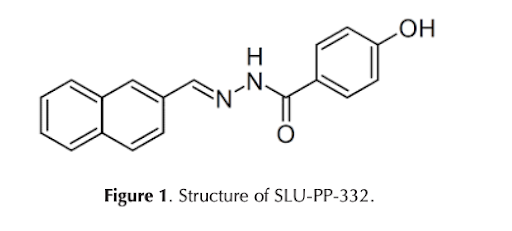
SLU-PP-332 is a synthetic agonist of the estrogen receptor-related receptors (ERRs), a group of nuclear receptors that regulate energy metabolism. By selectively activating these receptors, SLU-PP-332 enhances the body’s natural aerobic exercise response, leading to amplified energy expenditure and accelerated fat metabolism. This compound mimics and intensifies physiological metabolic pathways typically triggered by exercise, making it a potential game-changer in metabolic health and fitness.
The Role of Estrogen-Related Receptors (ERRs) in Metabolic Regulation and Disease
Overview of ERRs and Their Function
Estrogen-related receptors (ERRs) are a family of orphan nuclear receptors that play a fundamental role in regulating metabolic genes and cellular energy metabolism. Despite their structural similarity to estrogen receptors (ERs), ERRs do not bind estrogen; instead, they act as transcription factors that regulate a wide array of physiological processes by controlling gene expression linked to metabolism, mitochondrial function, and cellular homeostasis.
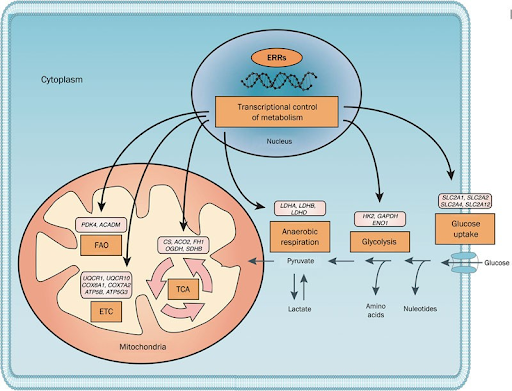
Among the three known isoforms—ERRα (NR3B1), ERRβ (NR3B2), and ERRγ (NR3B3)—the most extensively studied are ERRα and ERRγ, which have been shown to regulate several key metabolic pathways, including:
- Glucose metabolism – Enhancing glycolysis and gluconeogenesis.
- Fatty acid oxidation – Promoting lipid catabolism for energy production.
- Mitochondrial biogenesis – Stimulating the formation of new mitochondria to support cellular energy demands.
- Oxidative phosphorylation – Increasing ATP production efficiency in response to energy needs.
Specific Roles of ERR Isoforms in Metabolism
ERRα: A Master Regulator of Energy Metabolism
ERRα is predominantly expressed in energy-demanding tissues such as skeletal muscle, liver, heart, and brown adipose tissue. It regulates genes involved in fatty acid oxidation, mitochondrial biogenesis, and oxidative phosphorylation, making it essential for maintaining energy balance and endurance capacity. ERRα is also implicated in insulin sensitivity and glucose metabolism, making it a potential target for type 2 diabetes and metabolic syndrome therapy.
ERRγ: A Key Player in Cardiovascular and Muscle Function
ERRγ is highly expressed in cardiac and skeletal muscle, where it supports mitochondrial function and energy production. It has been linked to the regulation of aerobic capacity, endurance performance, and cardiac output. ERRγ activation has been proposed as a therapeutic strategy to enhance muscle endurance, prevent muscle atrophy, and protect against heart failure.
ERRβ: An Emerging Player in Stem Cell Maintenance and Development
While less studied than ERRα and ERRγ, ERRβ is crucial for embryonic stem cell pluripotency, suggesting an important role in developmental biology. Emerging research indicates its involvement in cellular differentiation, neural development, and metabolic regulation, but further studies are needed to fully understand its metabolic significance.
ERRs as Therapeutic Targets in Metabolic Diseases
Due to their central role in regulating energy metabolism, ERRs have emerged as potential therapeutic targets for various metabolic disorders. Disruptions in ERR signaling have been linked to diseases such as:
- Type 2 diabetes and insulin resistance – ERRα and ERRγ regulate glucose uptake and insulin sensitivity. Modulating their activity may improve glycemic control and metabolic flexibility.
- Cardiovascular diseases and heart failure – ERRγ plays a critical role in cardiac energy metabolism, making it a promising target for improving heart function.
- Muscle atrophy and sarcopenia – ERR activation enhances mitochondrial function in skeletal muscle, which may help preserve muscle mass and strength.
- Osteoporosis and bone metabolism – ERRs influence bone remodeling, suggesting that targeting these receptors may help mitigate age-related bone loss.
Estrogen-related receptors (ERRs) are integral regulators of metabolic pathways, mitochondrial function, and cellular energy balance. Their involvement in glucose and lipid metabolism, oxidative phosphorylation, and tissue-specific energy demands highlights their significance in both physiological and pathological conditions. As research continues to unravel their complex mechanisms, targeting ERRs holds great therapeutic potential for metabolic disorders, cardiovascular diseases, and muscle-related conditions. Future investigations into selective ERR modulators could pave the way for novel treatments aimed at enhancing metabolic health and physical performance.
Distinct Advantages of SLU-PP-332 Over Traditional Exercise
SLU-PP-332 is a novel metabolic activator that enhances energy expenditure and fat metabolism without affecting food intake, appetite, or the voluntary initiation of physical activity. Unlike traditional exercise, which requires significant physical exertion to stimulate metabolic pathways, SLU-PP-332 directly activates cellular energy metabolism, mimicking the physiological effects of endurance training at the molecular level.
This agent works by amplifying a natural metabolic pathway that is typically activated during aerobic exercise, leading to increased mitochondrial function, enhanced oxidative phosphorylation, and improved lipid metabolism. As a result, SLU-PP-332 promotes fat loss, endurance capacity, and muscle energy efficiency, potentially making it a revolutionary tool in fitness, metabolic health, and medical applications.
Mechanism of Action: Enhancing Mitochondrial Function
SLU-PP-332 exerts its effects by stimulating mitochondrial function and cellular respiration in skeletal muscle cell lines, a key component of endurance and metabolic efficiency. It enhances the expression of pyruvate dehydrogenase kinase 4 (Pdk4), a crucial target gene of ERRs that regulates glucose and fatty acid oxidation. Additionally, it boosts mitochondrial respiration in C2C12 myocytes, which contributes to greater ATP production and sustained energy levels.
One of the significant findings from experimental studies is that SLU-PP-332 increases oxidative fibers in skeletal muscle, a shift that is commonly observed in endurance-trained individuals. This muscle fiber adaptation enhances exercise capacity and endurance, as demonstrated in C57BL/6J mice, where administration of SLU-PP-332 improved running performance and resistance to fatigue. By promoting oxidative metabolism, the compound encourages the use of fatty acids as a primary fuel source, leading to reduced fat mass accumulation over time. Specifically, it:
- Boosts mitochondrial respiration in skeletal muscle cell lines, leading to increased ATP production.
- Upregulates pyruvate dehydrogenase kinase 4 (Pdk4), a key ERR-regulated gene involved in energy balance and metabolic efficiency (9,10).
- Stimulates oxidative metabolism in C2C12 myocytes, mimicking the energy-demanding conditions of endurance training.
By engaging these pathways, SLU-PP-332 effectively enhances muscle endurance, fat oxidation, and overall energy expenditure, offering similar metabolic benefits to exercise without the need for prolonged physical exertion.
Beyond its effects on skeletal muscle, SLU-PP-332 also modulates ERR activity in other vital organs, including cardiac tissue and the brain. In cardiac cells, ERR activation supports mitochondrial biogenesis and enhances cardiac efficiency, potentially benefiting cardiovascular health. In the brain, ERRs play a crucial role in neuronal energy homeostasis, which suggests that SLU-PP-332 might have neuroprotective properties by optimizing mitochondrial function in neurons.
Research on the Potential Impact on Fitness, Weight Loss, and Metabolic Health
One of the most exciting aspects of SLU-PP-332 is its ability to induce muscle metabolism and increase energy expenditure without requiring voluntary exercise. This could have wide-ranging applications for:
- Individuals struggling with obesity and weight loss – By amplifying fat metabolism, SLU-PP-332 could serve as an exercise mimetic, helping individuals burn calories and lose fat even in sedentary conditions.
- Athletes and fitness enthusiasts – Enhancing mitochondrial efficiency and endurance could improve performance and recovery, making it a potential supplement for endurance sports.
- Patients with limited mobility – Those suffering from muscle-wasting diseases, paralysis, or chronic fatigue syndromes may benefit from a pharmacological approach to maintaining metabolic health.
SLU-PP-332 vs. Exercise: Complementary or Alternative?
While SLU-PP-332 replicates many of the metabolic benefits of exercise, it does not replace all aspects of physical activity. Exercise confers neuromuscular, cardiovascular, and cognitive benefits that go beyond mitochondrial metabolism. However, SLU-PP-332 could serve as a complementary intervention to enhance endurance and fat oxidation or a potential alternative for individuals who are unable to engage in traditional physical activity due to medical conditions.
Safety Profile and Potential Applications
One of the most notable findings from experimental studies is that SLU-PP-332 did not produce significant adverse effects during trials. This suggests that it could be a safe and effective metabolic enhancer for use. Additionally, emerging research suggests possible kidney-protective properties, which may expand its therapeutic applications to conditions such as chronic kidney disease (CKD) and metabolic syndrome.
Short-Term and Long-Term Effects of SLU-PP-332
SLU-PP-332 is a novel metabolic activator still in its early stages of development; research studies on mice suggest promising metabolic benefits without adverse side effects. Unlike traditional weight-loss drugs that often suppress hunger, SLU-PP-332 does not alter appetite or food intake. Instead, it amplifies a natural metabolic pathway typically activated by endurance exercise, leading to increased energy expenditure, accelerated fat metabolism, and enhanced mitochondrial function in skeletal muscle.
Research suggests that SLU-PP-332 induces physiological changes like those observed in endurance athletes, essentially making the body behave as if it were training for a marathon. This was demonstrated in a study by Billon et al., where obese mice were treated with SLU-PP-332 twice daily for 28 days. The results were remarkable: treated mice gained ten times less fat than their untreated counterparts and exhibited a 12% reduction in total body weight despite identical food intake between both groups. This evidence suggests that SLU-PP-332 significantly enhances fat oxidation and metabolic efficiency, making it a potential therapeutic option for obesity and metabolic disorders.
The long-term effects of SLU-PP-332 remain unknown, as it is still in the early stages of development. However, it has not produced any serious side effects in research studies.
The molecule exerts its effects by targeting estrogen-related receptors (ERRs), a class of proteins that regulate energy metabolism across multiple tissues. ERR activation influences metabolic pathways in skeletal muscle by enhancing mitochondrial biogenesis and oxidative metabolism, in cardiac tissue by supporting energy metabolism in heart cells, and in the brain, where it may contribute to cognitive health and neuroprotection. Given these effects, SLU-PP-332 is being investigated for its potential therapeutic applications beyond weight loss, including type 2 diabetes, nonalcoholic fatty liver disease (NAFLD) and nonalcoholic steatohepatitis (NASH), heart failure, kidney disease, and even cognitive dysfunction.
Nephrology Perspective of SLU-PP-332
SLU-PP-332 presents a promising potential therapeutic option for metabolic disorders such as type 2 diabetes, obesity, nonalcoholic fatty liver disease (NAFLD), heart failure, and kidney disease. Given that kidney disease is often linked to metabolic dysfunction, weight loss and improved metabolic health following SLU-PP-332 administration could have renoprotective effects, particularly in patients with diabetic nephropathy and chronic kidney disease (CKD). By enhancing mitochondrial efficiency and reducing fat accumulation, this drug could potentially alleviate some of the metabolic stressors that contribute to kidney damage. Additionally, improved insulin sensitivity and lipid metabolism may help mitigate glomerular hyperfiltration and inflammation, key factors in the progression of kidney disease.
Future Potential in Fitness, Metabolic Disorders, and Therapeutic Applications
SLU-PP-332 has significant implications for the future of fitness and weight management, as it mimics the beneficial metabolic adaptations of exercise at the cellular level. Its ability to stimulate energy expenditure, fatty acid oxidation, and mitochondrial respiration makes it a promising candidate for enhancing athletic performance, accelerating fat loss, and improving metabolic health.
Additionally, this compound may have therapeutic potential for individuals with metabolic disorders such as obesity, type 2 diabetes, and mitochondrial diseases, where impaired energy metabolism is a key factor. By directly targeting and optimizing metabolic pathways, SLU-PP-332 could serve as a pharmacological intervention for individuals who struggle with exercise intolerance or inefficient energy utilization.
Conclusion
SLU-PP-332 offers several advantages over traditional exercise, particularly in its ability to enhance metabolic pathways without altering appetite or food intake. By mimicking some of the metabolic benefits of physical activity, it holds great potential for individuals struggling with obesity, diabetes, and related metabolic disorders. However, it is crucial to recognize that exercise provides numerous physiological and psychological benefits beyond weight loss, including improvements in cardiovascular health, muscle strength, mental well-being, and overall quality of life. While SLU-PP-332 may serve as a complementary or alternative intervention for those unable to engage in regular physical activity, it should not be seen as a complete substitute for exercise. Future research will determine its viability as a safe and effective therapeutic option and its potential role in nephrology and metabolic medicine.
References
[1] Billon C, Sitaula S, Banerjee S, Welch R, Elgendy B, Hegazy L, et al. Synthetic ERRα/β/γ Agonist Induces an ERRα-Dependent Acute Aerobic Exercise Response and Enhances Exercise Capacity. ACS Chem Biol. 2023;18:756-771. doi: 10.1021/ acschembio.2c00720. [2] Billon C, Schoepke E, Avdagic A, Chatterjee A, Butler AA, Elgendy B, Walker JK, Burris TP. A Synthetic ERR Agonist Alleviates Metabolic Syndrome. J Pharmacol Exp Ther. 2024 Jan 17;388(2):232-240. doi: 10.1124/jpet.123.001733. PMID: 37739806; PMCID: PMC10801787. [3] C.-H. Chang, W.-C. Tsai, M.-S. Lin, Y.-H. Hsu, and J.-H. S. Pang, “The promoting effect of pentadecapeptide BPC 157 on tendon healing involves tendon outgrowth, cell survival, and cell migration,” J. Appl. Physiol., vol. 110, no. 3, pp. 774-780, Mar. 2011. [4] Wang XX, Myakala K, Libby AE, Krawczyk E, Panov J, Jones BA, et al. Estrogen-related receptor agonism reverses mitochondrial dysfunction and inflammation in the aging kidney. Am J Pathology. 2023;193:1969-1987. doi: 10.1016/j. ajpath.2023.07.008.