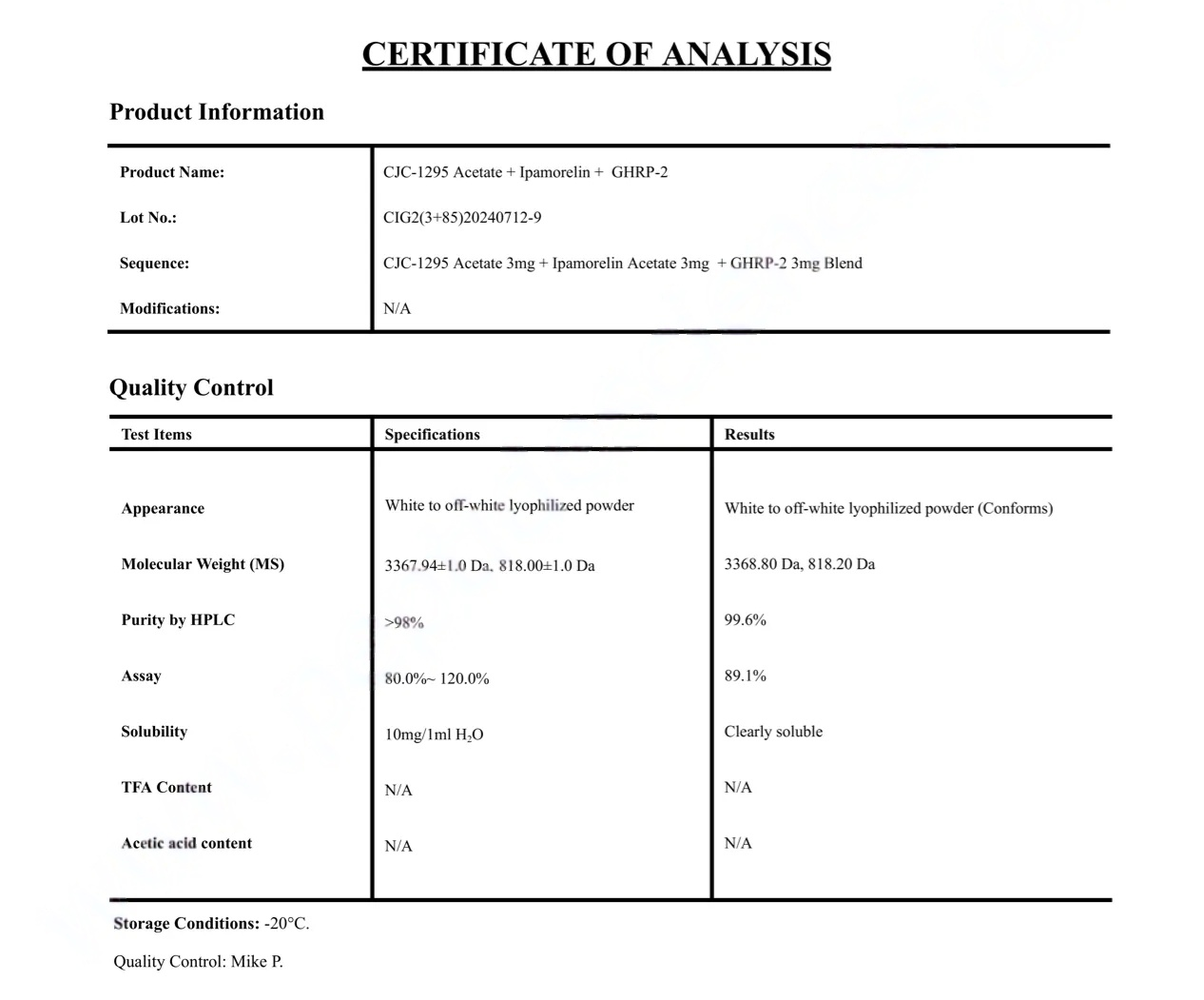
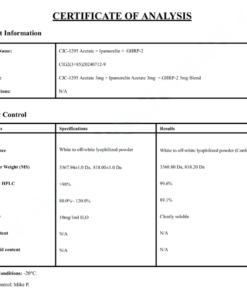
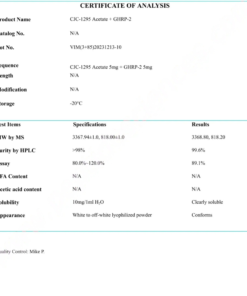
COA-CJC1295-Ipamorelin-GHRP-2-Blend Certificate
CJC1295, Ipamorelin, GHRP-2 (Blend) 2mg: The Ultimate Triple-Peptide Growth Hormone Secretagogue for Advanced Research
Among the most researched and strategically designed peptide combinations in neuroendocrinology, the triple-blend formulation of CJC1295, Ipamorelin, and GHRP-2 represents a sophisticated approach to growth hormone axis research that goes far beyond what any single peptide can achieve in isolation. Each component of this precision-engineered 2mg blend targets the growth hormone secretagogue pathway through a distinct and complementary mechanism — creating a multi-layered, synergistic stimulation of the somatotropic axis that is both more physiologically comprehensive and more scientifically informative than monotherapy approaches.
This research-grade 2mg blend delivers CJC1295 (with DAC), a long-acting growth hormone releasing hormone analog; Ipamorelin, a selective and highly specific ghrelin mimetic and GH secretagogue; and GHRP-2 (Growth Hormone Releasing Peptide-2), a potent hexapeptide with well-characterized effects on both pituitary and hypothalamic GH release pathways. Together, these three peptides engage the full architecture of the growth hormone axis in a manner that closely mirrors and amplifies the physiological pulsatile patterns of endogenous GH secretion. This blend is supplied exclusively for qualified scientific research purposes.
HPLC CJC1295, Ipamorelin, GHRP-2 (Blend)Certificate
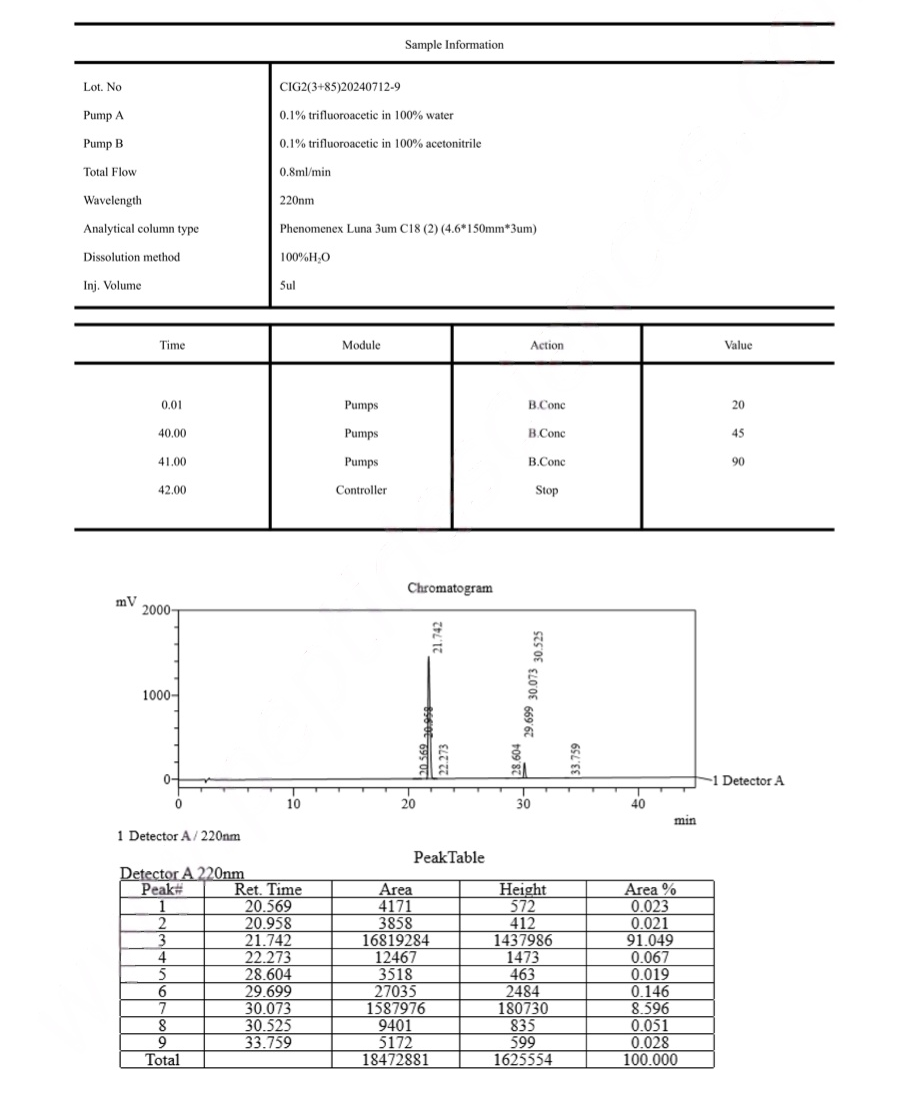
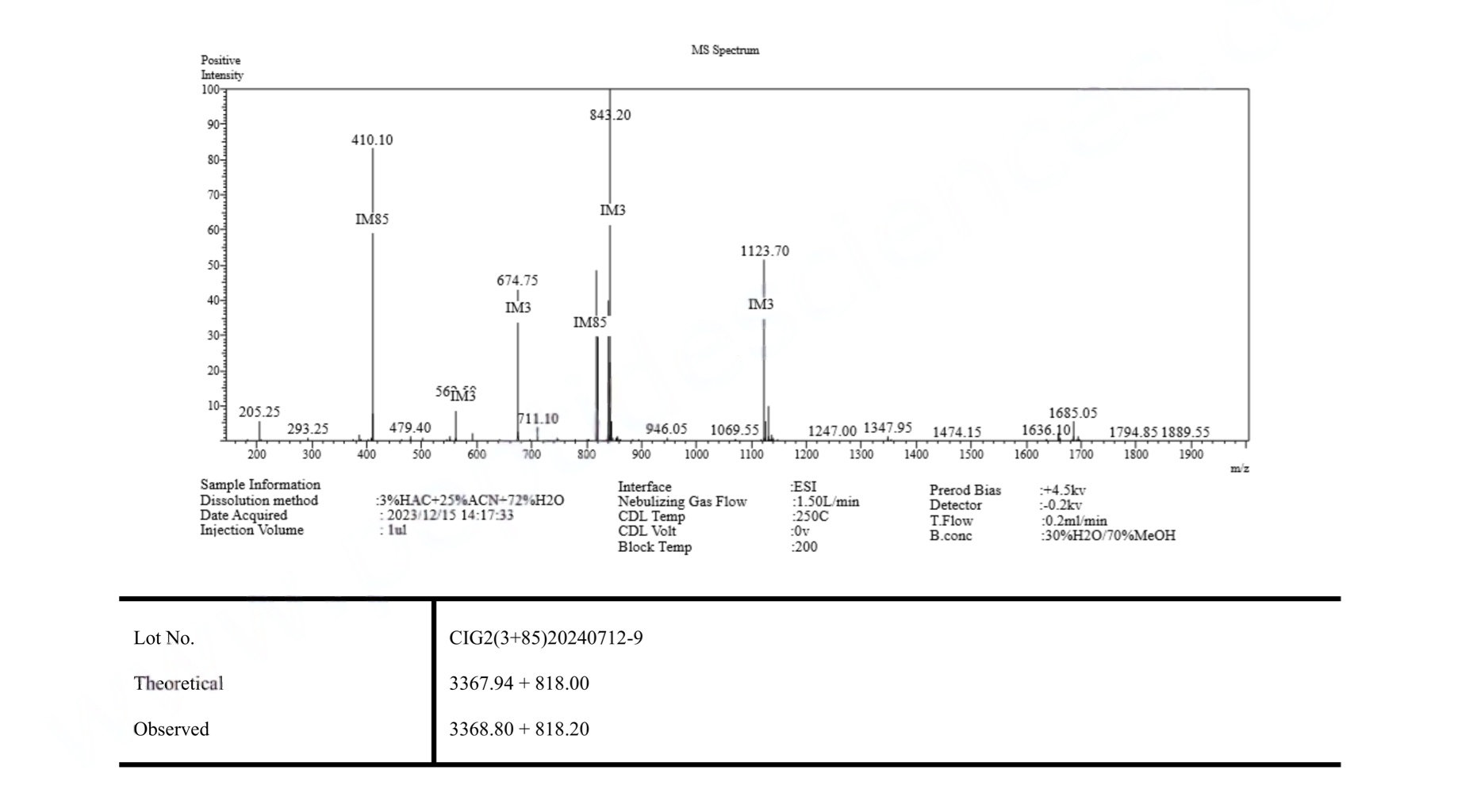
MS CJC1295, Ipamorelin, GHRP-2 (Blend)Certificate
Understanding Each Component: The Science Behind the Triple-Peptide Blend
To fully appreciate why the CJC1295, Ipamorelin, and GHRP-2 blend represents such a powerful research tool, it is essential to understand what each individual peptide does, how it achieves its effects, and why its combination with the other two creates something considerably more comprehensive than the sum of the individual parts.
CJC1295 (with DAC): The Long-Acting GHRH Analog
CJC1295 is a synthetic analog of growth hormone releasing hormone (GHRH), the 44-amino-acid hypothalamic peptide that stimulates the anterior pituitary somatotrophs to synthesize and release growth hormone. Native GHRH has a very short plasma half-life of only two to three minutes due to rapid degradation by the enzyme dipeptidyl peptidase IV (DPP-IV). CJC1295 overcomes this limitation through two key structural innovations: first, the substitution of four amino acids that are primary DPP-IV cleavage sites, conferring intrinsic resistance to enzymatic degradation; second, the incorporation of a Drug Affinity Complex (DAC) — a reactive maleimidoproprionic acid group that forms a stable covalent bond with circulating albumin upon subcutaneous administration.
This albumin-binding technology transforms CJC1295 from a peptide that would otherwise last minutes in circulation into one with a half-life of approximately 6 to 8 days, enabling sustained GHRH receptor stimulation throughout the week-long dosing interval. In research settings, CJC1295 with DAC produces a measurable and sustained elevation of mean GH levels and insulin-like growth factor 1 (IGF-1) concentrations that persists for days following a single administration — providing a stable hormonal research substrate on which the pulsatile effects of the GHRP components are superimposed.
Ipamorelin: The Selective and Clean GH Secretagogue
Ipamorelin is a pentapeptide GH secretagogue — a synthetic ghrelin mimetic that stimulates GH release by activating the growth hormone secretagogue receptor (GHS-R1a), also known as the ghrelin receptor. What distinguishes Ipamorelin from other GH secretagogues in its class — and is the primary reason it is so widely used in research — is its exceptional selectivity profile. At doses that produce robust GH release, Ipamorelin demonstrates negligible stimulation of cortisol, prolactin, ACTH, and aldosterone — the off-target hormonal effects that complicate the interpretation of research data and the safety profiles of less selective secretagogues.
This clean selectivity makes Ipamorelin an invaluable component of the triple blend because it contributes meaningfully to GH pulse amplitude without introducing the confounding hormonal noise of non-selective GHS-R1a agonists. Research has documented that Ipamorelin produces GH pulses of substantial amplitude that are additive to those produced by GHRH stimulation — exactly the kind of complementary, non-redundant mechanism that makes multi-peptide blend research so scientifically productive. Its relatively short half-life of approximately two hours means it contributes a discrete, well-timed GH pulse that can be precisely controlled in research protocols.
GHRP-2: The Potent Dual-Pathway GH Releasing Hexapeptide
GHRP-2 — growth hormone releasing peptide-2 — is a synthetic hexapeptide that stimulates GH secretion through a dual mechanism that makes it distinctly more potent than GHS-R1a agonism alone. Like Ipamorelin, GHRP-2 activates the ghrelin receptor at pituitary somatotrophs to directly stimulate GH release. But GHRP-2 additionally acts at the hypothalamic level, stimulating the release of endogenous GHRH from hypothalamic neurons — thereby engaging both arms of the physiological GH regulatory axis simultaneously. This dual-site, dual-mechanism action produces particularly robust GH pulse amplitudes that are among the highest documented for any single GH secretagogue in research settings.
GHRP-2 also produces a modest and dose-dependent stimulation of ghrelin in peripheral tissues, which may contribute to its appetite-stimulating effects observed in research subjects and which has made it valuable for studying the ghrelin-GH axis interaction. Unlike Ipamorelin, GHRP-2 does produce some cortisol and prolactin co-stimulation at higher doses — an effect that is well-characterized in the literature and that provides additional research value when investigators wish to examine the full breadth of GHS-R1a activation compared to selective agonism.
The Synergistic Rationale: Why Three Peptides Are More Powerful Than One
The scientific rationale for combining CJC1295, Ipamorelin, and GHRP-2 in a single research blend is rooted in the complementary architecture of the growth hormone regulatory axis — a system designed by evolution to integrate multiple hormonal inputs before committing to a GH pulse of appropriate amplitude and timing
GHRH and GHS-R1a Co-Stimulation: The Physiological Amplification Principle
The pituitary somatotroph does not respond to GHRH and GHS-R1a agonists in a simply additive fashion. Research has consistently demonstrated that the co-administration of a GHRH analog and a GH secretagogue produces GH pulses substantially larger than the arithmetic sum of their individual responses — a phenomenon known as synergistic amplification. The mechanistic basis for this synergy involves complementary intracellular signaling pathways: GHRH primarily activates the cAMP-PKA pathway to stimulate GH gene transcription and GH vesicle exocytosis, while GHS-R1a agonists primarily activate the IP3-calcium pathway to trigger rapid GH granule fusion and secretion. When both pathways are activated simultaneously, the GH response is dramatically amplified beyond what either pathway alone can produce.
In the triple-peptide blend, CJC1295 provides sustained GHRH receptor occupancy across the full dosing interval, while Ipamorelin and GHRP-2 deliver additional acute GHS-R1a stimulation that exploits this synergistic amplification to produce GH pulses of exceptional research-relevant amplitude. The result is a far more complete and physiologically informative stimulation of the somatotropic axis than any single peptide could generate.
Complementary Duration Profiles: Baseline Elevation Plus Pulsatility
A critically important feature of the triple blend is that its three components operate across distinctly different timescales — and these different timescales are precisely complementary to the physiological pattern of GH secretion that researchers wish to study and understand. CJC1295 with DAC provides a sustained, multi-day elevation of mean GH and IGF-1 levels that establishes the research baseline and ensures continuous GHRH receptor priming. Against this sustained background, the shorter-acting Ipamorelin and GHRP-2 components produce discrete GH pulses of high amplitude at the time of administration — recreating the pulsatile superimposed-on-tonic pattern that characterizes physiologically normal growth hormone secretion patterns in young adults with robust somatotropic axis function.
Selective vs. Non-Selective GHS-R1a Stimulation: Research Coverage
The inclusion of both Ipamorelin and GHRP-2 in the blend provides researchers with the ability to observe and compare the effects of selective versus non-selective GHS-R1a activation within the same research system. Ipamorelin’s clean selectivity isolates the direct GH-stimulating effects of GHS-R1a activation in the pituitary, while GHRP-2’s additional hypothalamic GHRH-releasing and peripheral ghrelin-stimulating activities add dimensions to the research data that Ipamorelin alone cannot provide. This breadth of mechanistic coverage makes the triple blend particularly valuable for investigators studying the full scope of the growth hormone secretagogue pathway and its regulatory interactions.
Research Applications of CJC1295, Ipamorelin, GHRP-2 Blend 2mg
This triple-peptide GH secretagogue blend is suited to a broad spectrum of research investigations across neuroendocrinology, metabolic biology, body composition science, and aging research. Key applications include:
- Growth hormone axis pharmacology — characterizing the pharmacokinetics and pharmacodynamics of multi-peptide GHRH plus GHS-R1a co-stimulation and quantifying synergistic amplification of GH pulse amplitude
- IGF-1 axis research — investigating the downstream effects of sustained and pulsatile GH elevation on hepatic IGF-1 production, tissue-level IGF-1
- receptor activation, and anabolic signaling cascades in muscle, bone, and adipose tissue
- Body composition and metabolic research — studying how GH secretagogue-induced GH elevation influences lipolysis, fat oxidation, lean mass preservation, and insulin sensitivity in research models
- Sleep architecture and GH secretion research — examining the relationship between GH secretagogue-stimulated GH pulses and the deep sleep-associated GH release that is central to tissue repair and metabolic regulation
- Anti-aging and somatopause research — investigating the role of GH axis decline in biological aging and whether secretagogue-mediated GH restoration can reverse or attenuate age-related changes in body composition, bone density, and metabolic function
- Muscle repair and recovery biology — studying the mechanisms through which GH and IGF-1 elevation accelerates satellite cell activation, myofibrillar protein synthesis, and connective tissue repair following exercise or injury
- Ghrelin axis interaction studies — using the differential selectivity profiles of Ipamorelin and GHRP-2 to dissect the contributions of pituitary versus hypothalamic GHS-R1a activation to the overall GH secretory response
- Dose-response and protocol optimization research — characterizing how varying the timing, frequency, and relative component ratios of the triple blend influences GH pulse architecture, IGF-1 elevation magnitude, and downstream biological effects
Key Research Outcomes Associated With GH Secretagogue Blend Protocols
Published and ongoing research using CJC1295, Ipamorelin, GHRP-2, and their combinations has documented a range of biological outcomes that define the scientific value of this triple-peptide blend for investigators working across multiple research domains.
Growth Hormone and IGF-1 Elevation
CJC1295 alone has been shown in human pharmacokinetic studies to produce sustained elevations in mean GH concentrations of 2 to 10 fold above baseline, with corresponding IGF-1 increases of 1.5 to 3 fold, persisting for 6 to 8 days following a single subcutaneous administration. When combined with GHS-R1a agonists that exploit the synergistic amplification principle, peak GH pulse amplitudes substantially exceed those produced by CJC1295 alone — making the triple blend a particularly potent tool for research requiring robust somatotropic axis stimulation.
Lean Mass and Body Composition Effects
Research in both animal models and human clinical studies has consistently associated sustained GH and IGF-1 elevation with favorable changes in body composition — specifically, increases in lean body mass and reductions in adipose tissue, particularly in the visceral fat compartment. These effects are mediated through GH-stimulated lipolysis, IGF-1-mediated muscle protein synthesis, and the anabolic effects of GH on connective tissue including collagen, tendons, and cartilage. The triple-peptide blend, by producing both sustained GH elevation and high-amplitude GH pulses, provides a research tool well-suited to investigating these compositional mechanisms across their full physiological range.
Recovery and Tissue Repair Mechanisms
GH and IGF-1 play central roles in the biology of tissue repair following mechanical stress, injury, or surgical trauma. IGF-1 activates the PI3K-Akt-mTOR pathway in muscle satellite cells, driving their proliferation and differentiation into new myofibers. GH directly stimulates collagen synthesis in fibroblasts and promotes the structural repair of tendons and ligaments. The GH secretagogue blend’s ability to elevate both basal and pulsatile GH and IGF-1 makes it an exceptionally useful research tool for investigators studying tissue repair biology, wound healing, and the mechanisms of exercise-induced adaptation.
Product Specifications, Storage, and Quality Standards
Analytical and Composition Specifications
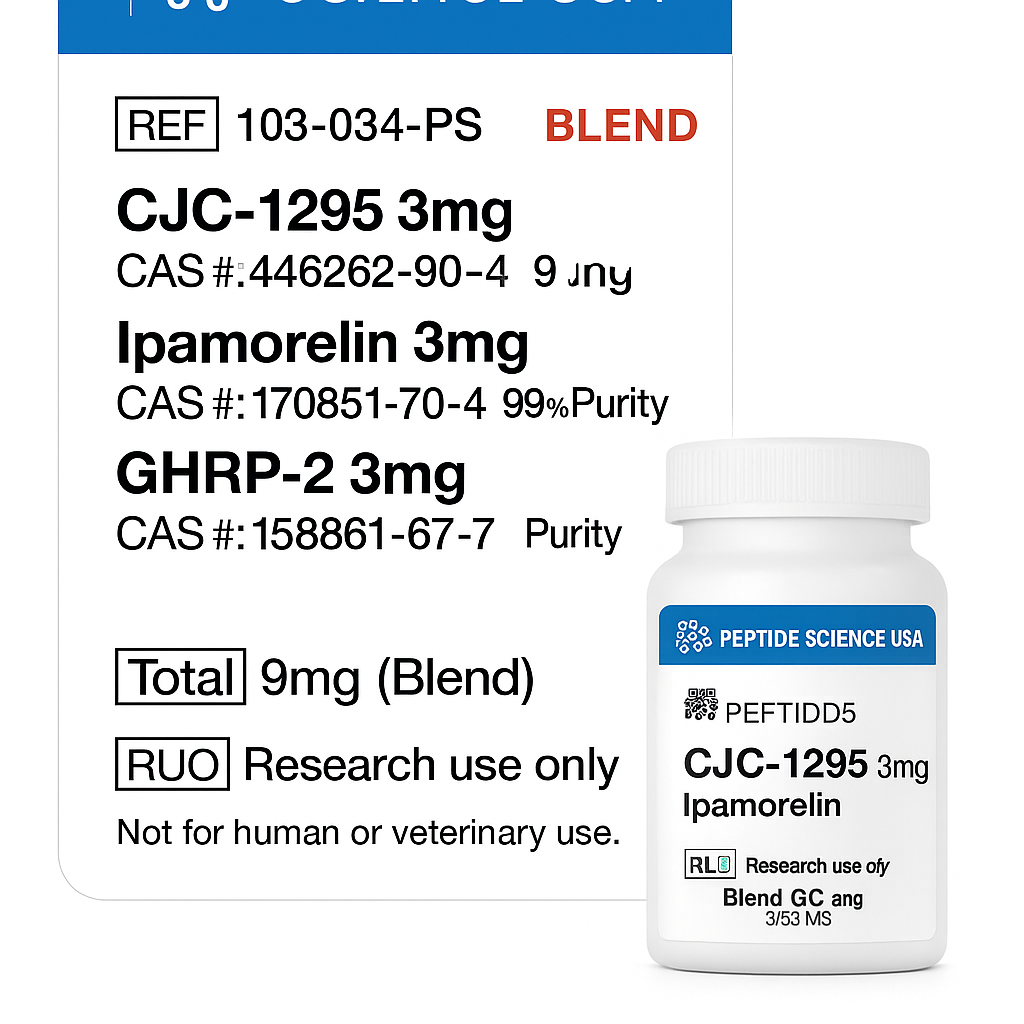
- Active components: CJC1295 (with DAC), Ipamorelin, and GHRP-2 in a combined 2mg research-grade lyophilized blend
- Purity: Each component verified at minimum 98% by HPLC analysis with mass spectrometric identity confirmation
- Endotoxin testing: LAL assay confirmed below 1 EU/mg for the complete blend
- Sterility: Produced under aseptic manufacturing conditions with microbiological testing prior to release
- Certificate of Analysis: Provided with every batch confirming identity, purity, and safety parameters for all three components
Storage, Reconstitution, and Handling
- Store lyophilized blend at -20 degrees Celsius, protected from light and humidity prior to reconstitution
- Reconstitute with sterile bacteriostatic water or sterile saline for research use — use gentle swirling rather than vigorous shaking to preserve peptide integrity
- Reconstituted solution stability: Use within 28 days when stored at 2 to 8 degrees Celsius
- Avoid repeated freeze-thaw cycles which may compromise the structural integrity and biological activity of the peptide components
- Handle under appropriate aseptic conditions consistent with research-grade biological peptide protocols throughout all stages of use
Research Use and Regulatory Statement
CJC1295, Ipamorelin, GHRP-2 (Blend) 2mg is supplied exclusively for in vitro and in vivo scientific research by qualified investigators operating under appropriate institutional and regulatory oversight. This product is not approved for human therapeutic use, veterinary application, or any application outside a legitimate and appropriately supervised research context. Researchers are entirely responsible for compliance with all applicable biosafety, ethics, and regulatory requirements governing the acquisition, storage, and use of research-grade peptide materials. This product is not intended for self-administration under any circumstances.
Advance Growth Hormone Axis Research With the CJC1295, Ipamorelin, GHRP-2 Triple Blend
The CJC1295, Ipamorelin, GHRP-2 (Blend) 2mg formulation represents the most scientifically comprehensive and mechanistically complete GH secretagogue research tool currently available. By combining sustained GHRH receptor priming with selective and non-selective GHS-R1a co-stimulation across complementary timescales, this triple-peptide blend engages the full physiological architecture of the somatotropic axis in a way that no single peptide can replicate.
Whether your research focuses on GH pulse architecture, IGF-1 axis biology, body composition mechanisms, tissue repair pathways, or the neurobiology of growth hormone regulation, the CJC1295, Ipamorelin, GHRP-2 Blend 2mg delivers the purity, potency, and analytical documentation your most demanding research protocols require. Order today and equip your laboratory with the triple-peptide platform that is defining the standard for growth hormone axis research.
| Quantity | 2mg * 10 vials, 5mg * 10 vials, 10mg * 10 vials |
|---|
5 reviews for CJC1295, Ipamorelin, GHRP-2 (Blend)2mg | 5mg | 10mg
Add a review
Related products
Peptide Blends
Peptide Blends
Peptide Blends
Peptide Blends
Peptide Blends
Peptide Blends
Allison Granger –
Perfect synergy. Recovery and sleep have improved drastically
Jerome Fletcher –
Solid results—especially with muscle fullness and reduced fatigue
Tasha Nguyen –
Great blend. Felt results quicker than with single peptides
Corey Dawson –
Noticed better recovery time and lean gains. Very effective
Samantha Ortiz –
Highly recommend this combo. More energy, deeper sleep