
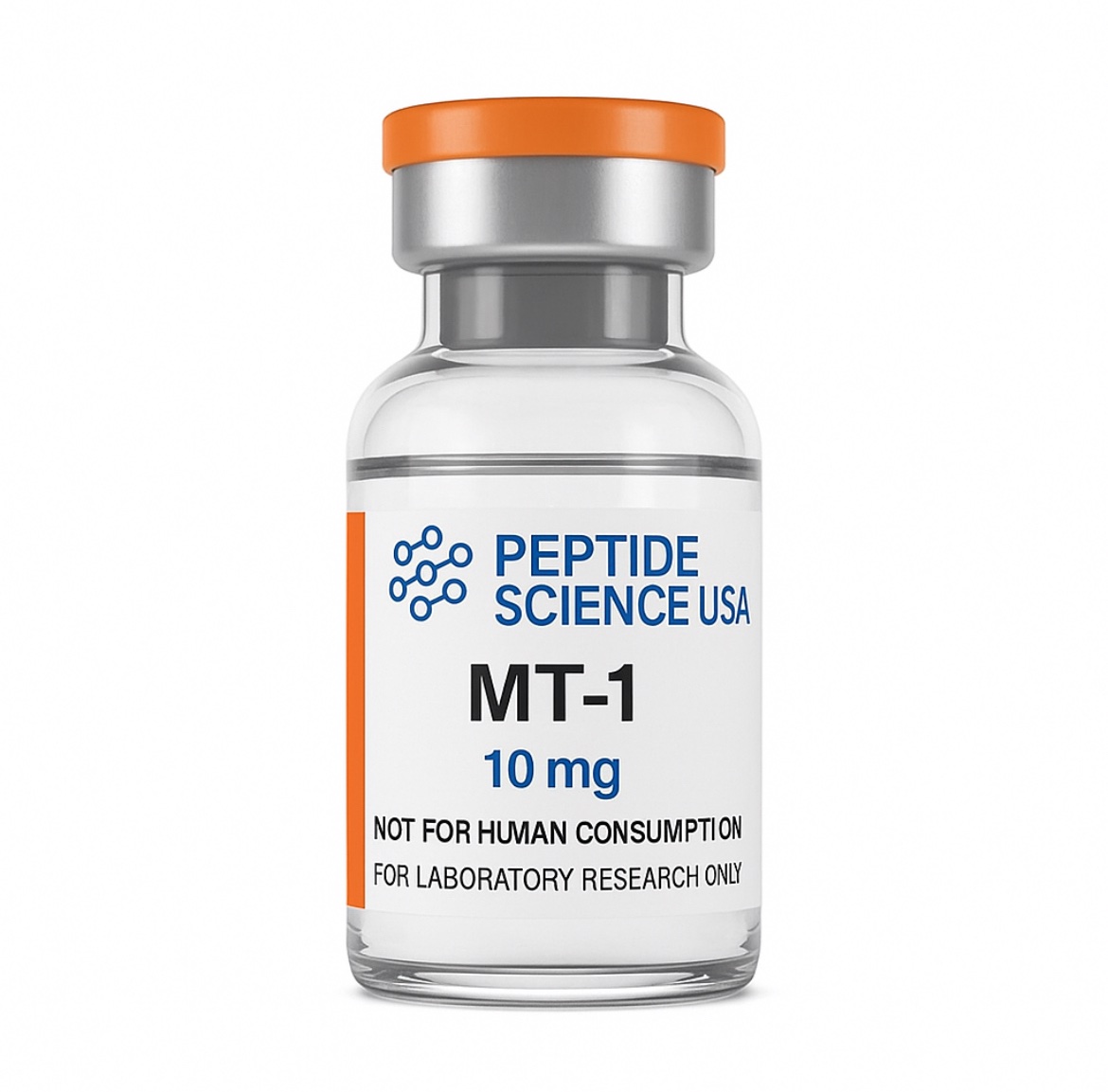
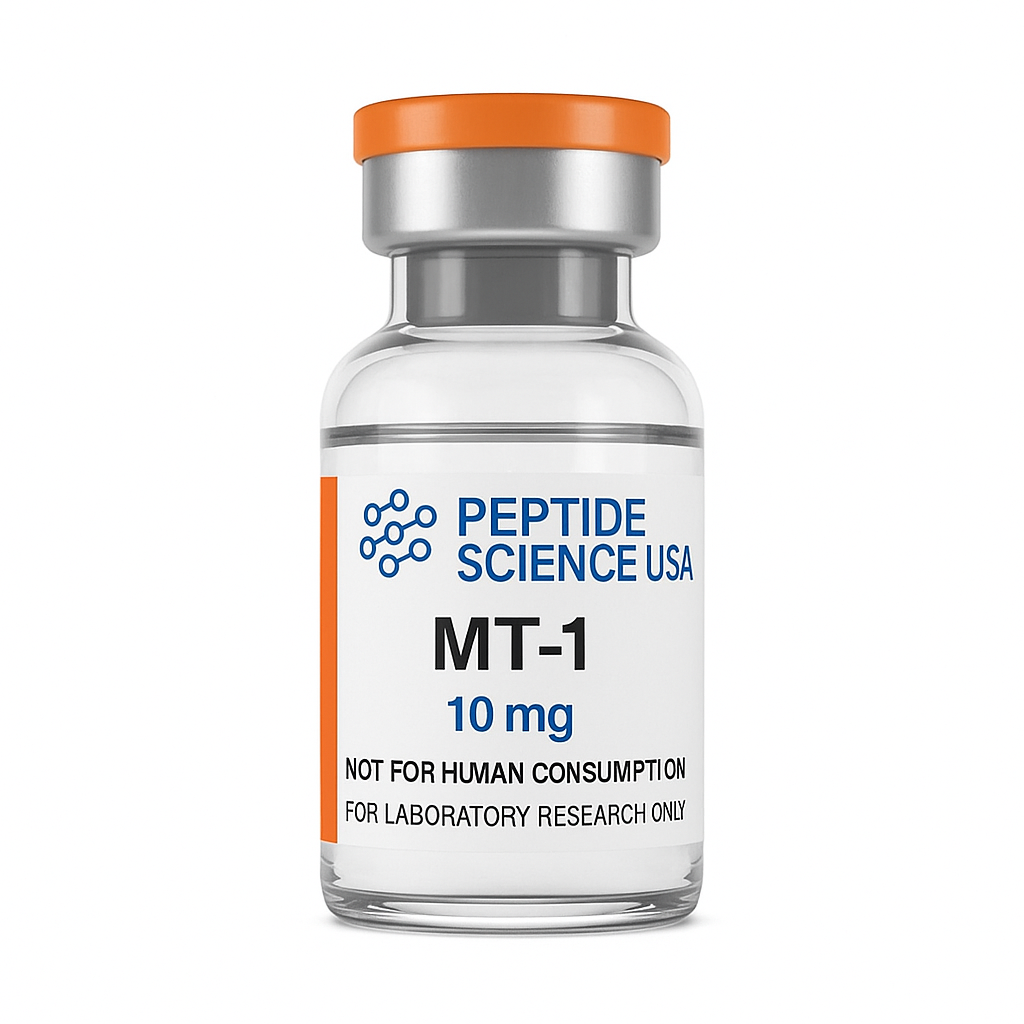
MT-1 (Melanotan 1) 10mg — The Pioneer MC1R Peptide for Photoprotection, Tanning & Melanocortin Research
MT-1, formally known as Melanotan I and scientifically designated Afamelanotide, is a synthetic linear analogue of the endogenous alpha-melanocyte-stimulating hormone (alpha-MSH) and one of the most extensively studied melanocortin peptides in the scientific literature. Originally developed at the University of Arizona in the 1980s through a landmark research programme aimed at understanding the melanocortin system’s role in pigmentation and photoprotection, MT-1 has since become a foundational compound in melanocortin receptor biology, dermatological research, and the broader investigation of melanocyte-activating pathways.
Presented here in a research-grade 10mg lyophilized vial, MT-1 Melanotan 1 offers investigators the analytical purity, batch consistency, and documentation required for rigorous scientific work. Whether your research focuses on MC1R receptor pharmacology, UV-induced DNA damage protection mechanisms, melanogenesis regulation, or the therapeutic potential of melanocortin agonism in photosensitivity disorders, MT-1 is the peptide that laid the scientific groundwork for the entire field — and remains one of its most important reference compounds.
What Is MT-1 (Melanotan 1)? Origin, Structure & Pharmacology
Melanotan I was created as part of a concerted effort to develop a pharmacological agent capable of stimulating the body’s natural tanning response — increasing melanin production in the skin — as a protective measure against ultraviolet radiation-induced damage. The scientific premise was elegant: if the skin could be pre-pigmented through pharmacological means, the resulting melanin shield would absorb and neutralize harmful UV photons before they could cause the DNA strand breaks associated with sunburn, photoaging, and skin cancer development.
MT-1 is a linear 13-amino acid peptide analogue of alpha-MSH, with a single key modification — the substitution of a norleucine (Nle) residue at position 4 and a D-phenylalanine (D-Phe) at position 7. These strategic modifications substantially increase the peptide’s resistance to enzymatic degradation and extend its biological half-life compared to native alpha-MSH, making MT-1 a far more practical research tool and therapeutic candidate. A controlled-release implant formulation of Afamelanotide (Scenesse) received European Medicines Agency (EMA) approval in 2014 for the prevention of phototoxicity in adults with erythropoietic protoporphyria —
a rare and debilitating photosensitivity disorder — providing significant clinical validation for MT-1’s mechanism of action.
Molecular Identity & Chemical Characteristics
MT-1 (Afamelanotide) is characterised by the amino acid sequence Ac-Ser-Tyr-Ser-Nle-Glu-His-D-Phe-Arg-Trp-Gly-Lys-Pro-Val-NH2. Its molecular formula is C78H111N21O19, with a molecular weight of approximately 1646.85 g/mol. In lyophilized form it presents as a stable white to off-white powder that reconstitutes cleanly in bacteriostatic water or sterile saline. The peptide’s linear architecture differentiates it structurally from the cyclic Melanotan II (MT-II), conferring a more selective receptor binding profile and a distinct pharmacological footprint.
MT-1 vs. MT-2: Understanding the Critical Distinction
MT-1 and MT-2 are frequently referenced together but represent fundamentally different research compounds. MT-1 is a linear peptide with high selectivity for the MC1R receptor subtype — the receptor expressed predominantly on melanocytes and responsible for controlling melanin synthesis and skin pigmentation. MT-2, by contrast, is a cyclic peptide with broader melanocortin receptor activity, engaging MC3R and MC4R in addition to MC1R, which accounts for its additional CNS-mediated effects on sexual arousal and appetite. For researchers specifically investigating the MC1R pathway — its role in photoprotection, melanogenesis, anti-inflammatory signalling, and skin cancer prevention — MT-1 is the more pharmacologically appropriate and scientifically precise tool.
Research Applications & Observed Effects of MT-1 Melanotan 1
1. Melanogenesis & Skin Pigmentation Research
The primary and most extensively documented research application of MT-1 is the stimulation of melanogenesis — the biochemical process by which melanocytes produce and distribute melanin pigment within the epidermis. Upon MC1R activation by MT-1, melanocytes upregulate the enzyme tyrosinase, the rate-limiting catalyst in the melanin biosynthesis pathway, leading to increased production of eumelanin (the dark, UV-absorptive form of melanin) over phaeomelanin. In human clinical trials, MT-1 administration has consistently produced statistically significant increases in skin melanin density, measured by reflectance spectrophotometry, with effects observable across multiple Fitzpatrick skin types.
2. Photoprotection & UV-Induced DNA Damage Prevention
One of MT-1’s most significant research implications is its potential as a pharmacological photoprotectant. Elevated melanin density induced by MC1R agonism provides a physical and chemical barrier against UV radiation, absorbing and scattering UV photons before they reach keratinocyte DNA. Research has demonstrated that MT-1-treated skin exhibits reduced formation of cyclobutane pyrimidine dimers (CPDs) — the primary UV-induced DNA lesions associated with mutagenesis — following controlled UV exposure. This photoprotective mechanism
forms the scientific basis for the clinical use of Afamelanotide in erythropoietic protoporphyria, where even minimal UV exposure causes severe phototoxic reactions.
3. Anti-Inflammatory & Immunomodulatory Properties
MT-1 and alpha-MSH share an established anti-inflammatory signalling profile mediated through MC1R activation on immune cells, including macrophages, dendritic cells, and monocytes. MC1R engagement by MT-1 suppresses nuclear factor kappa-B (NF-kB) activation, reduces pro-inflammatory cytokine production (including TNF-alpha and IL-6), and promotes the synthesis of interleukin-10, a key anti-inflammatory mediator. These properties have made MT-1 of growing research interest in the context of inflammatory skin conditions, including polymorphous light eruption and potentially in broader dermatological and systemic inflammatory research models.
4. Skin Cancer & Melanoma Pathway Research
The MC1R receptor has long been implicated in skin cancer susceptibility. Loss-of-function variants in the MC1R gene are well-established risk factors for melanoma and non-melanoma skin cancers, particularly in individuals with fair skin phenotypes. MT-1 serves as an essential pharmacological probe in research programmes studying how MC1R activation modulates DNA repair capacity, oxidative stress responses in melanocytes, and the balance between eumelanin and phaeomelanin production in determining cancer risk. Its well-characterised pharmacology makes it indispensable for mechanistic investigations into pigmentation-associated oncology pathways.
Product Specifications: MT-1 Melanotan 1 — 10mg Vial
Analytical & Technical Data
- Peptide name: MT-1 (Melanotan I / Afamelanotide)
- Sequence: Ac-Ser-Tyr-Ser-Nle-Glu-His-D-Phe-Arg-Trp-Gly-Lys-Pro-Val-NH2
- Molecular formula: C78H111N21O19
- Molecular weight: 1646.85 g/mol
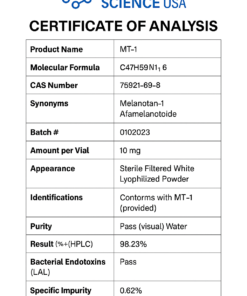
- CAS number: 75921-69-6
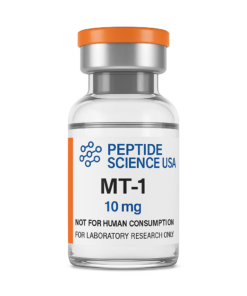
- Vial presentation: 10mg lyophilized powder
- Purity: ≥99% (HPLC and mass spectrometry verified)
- Appearance: White to off-white lyophilized powder
- Reconstitution vehicle: Bacteriostatic water or sterile saline
- Storage conditions: 2–8°C refrigerated; –20°C for long-term preservation
- Shelf life: 24 months lyophilized (sealed, refrigerated)
Quality Control & Certification
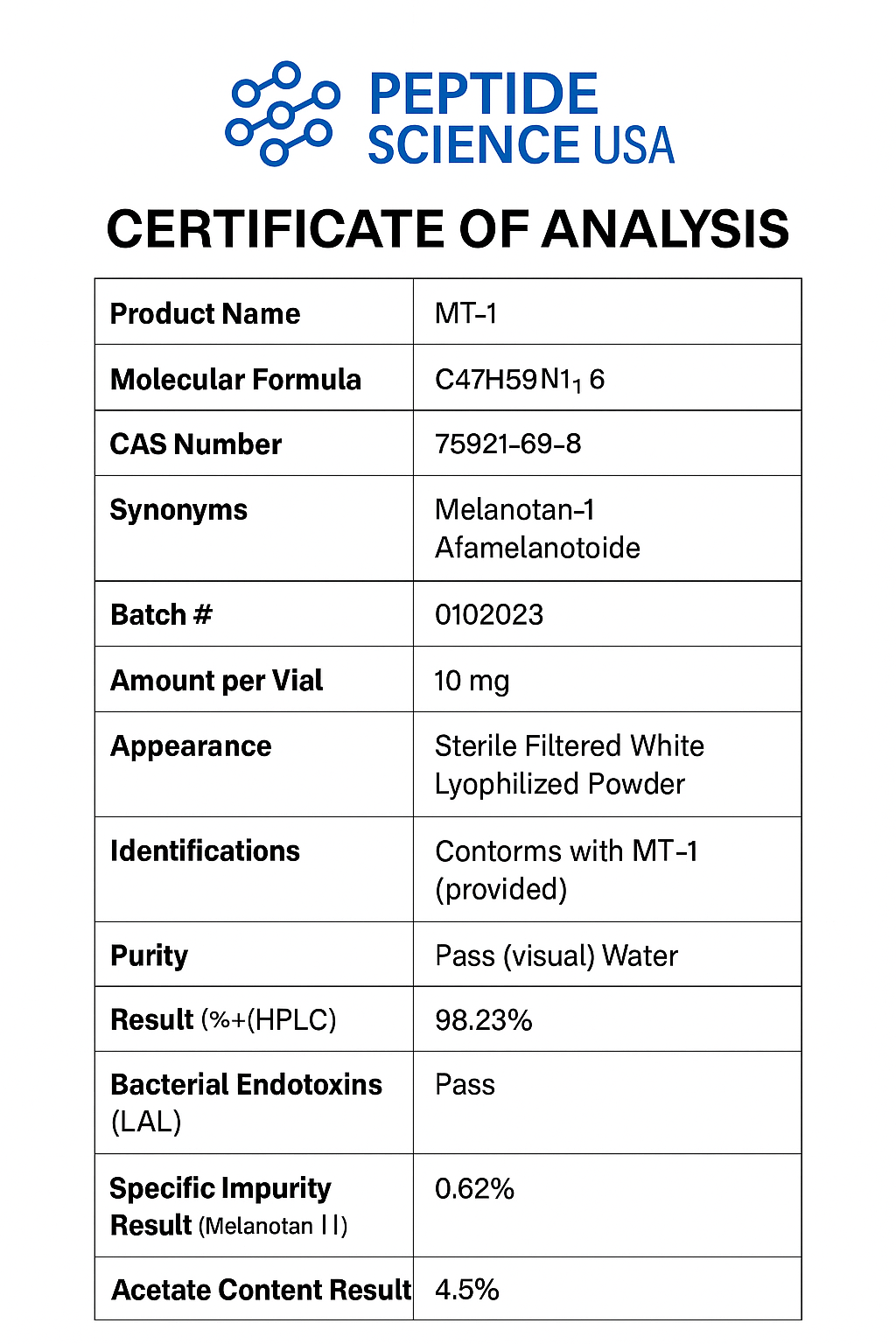
Every production batch of MT-1 Melanotan 1 is manufactured under GMP-aligned conditions and independently validated by accredited third-party analytical laboratories. Each 10mg vial is supported by a full Certificate of Analysis (CoA) confirming peptide identity by high-resolution mass spectrometry, sequence integrity, purity by reverse-phase HPLC, and sterility. Batch-specific CoA documentation is available upon request to support your research records and institutional compliance requirements.
Research & Regulatory Classification
MT-1 Melanotan 1 10mg is supplied exclusively for in vitro laboratory research and preclinical scientific investigation. It is not authorised for human self-administration in this research vial presentation and does not constitute a licensed medicinal product outside its approved clinical formulation (Scenesse). All purchase, storage, and use must comply fully with the applicable laws and institutional regulations governing research peptides in your jurisdiction.
Why Source MT-1 From Our Research Peptide Catalogue?
MT-1 Melanotan 1 requires exacting synthesis standards to achieve the sequence fidelity and purity necessary for reliable research outcomes. Our MT-1 is produced by solid-phase peptide synthesis (SPPS) with Fmoc chemistry, purified by preparative reverse-phase HPLC, and lyophilized under controlled conditions to ensure maximum stability and reconstitution performance. Each 10mg vial is individually quality-checked and arrives with complete analytical documentation.
For researchers working at the forefront of melanocortin science, pigmentation biology, photoprotection research, or MC1R pharmacology, our MT-1 provides the analytical confidence and batch-to-batch consistency that reproducible science demands. Combined with responsive specialist support and reliable global fulfilment, we are the research community’s trusted source for MT-1 and the full spectrum of advanced melanocortin peptides.
| Quantity | 10mg * 10 vials – $50 |
|---|
5 reviews for MT-110mg
Add a review
Related products
Peptide
Peptides
Peptides
Peptides
Peptides
Hailey Moore –
Gave me a natural, even tan with minimal sun exposure. Great for lighter skin tones.
Blake Foster –
Tested for photoprotection and pigmentation—worked exactly as expected
Sierra Jenkins –
Loved the glow without needing UV rays. Subtle and safe
Logan Ramirez –
Used for research—saw clear melanogenesis activation. Would purchase again
Kayla Wood –
Even tan, no blotches, and minimal side effects. Highly recommended